ServicesConcrete Courtyards
Concrete Courtyards in Fullerton
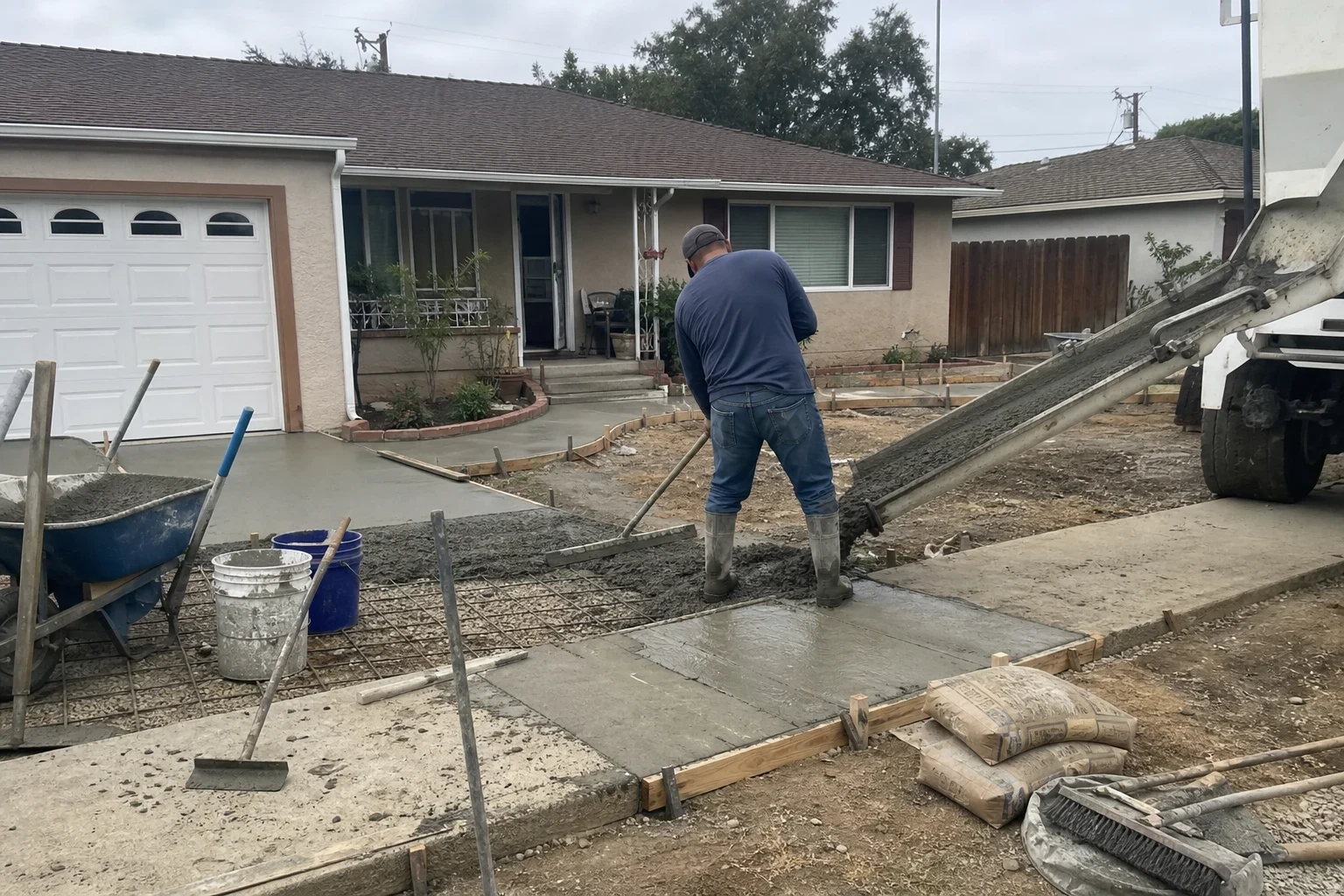
A courtyard sits close to your walls and windows, so the slab has to drain well, meet the house cleanly and look right from inside. We plan the slope, joints and finish first, then schedule the pour for weather that lets the concrete cure properly.
A slab built for an enclosed space
A courtyard is different from an open patio. It is bordered by the house, garden walls or a gate, which means rainwater has nowhere to run unless we give it a path. We set a gentle fall toward area drains or an outlet, keep the slab below door thresholds and leave a proper isolation joint wherever concrete meets a wall or footing.
Most of the year here is dry, but winter storms can drop a lot of water into an enclosed space in a few hours. We plan for that day, not the sunny one. In summer, we pour early in the morning so the surface does not dry ahead of the slab beneath it.
We have been pouring concrete for more than 15 years, and courtyards reward patience more than most jobs. The work is close to your home, so we treat it that way.
What your courtyard project includes
Removal and grading
We break out old concrete, pavers or turf, haul it away and grade the base. Soft or organic soil is dug out and replaced with compacted base rock so the slab sits on something stable.
Drainage planned into the forms
We set the slope and place drains, catch basins or a channel drain before any concrete arrives. Water moves away from the house and out of the courtyard rather than pooling at a doorway.
Steel and joint layout
We lift the rebar or mesh on chairs so the steel stays centered in the slab's depth once the concrete goes in. Cut lines are planned to meet corners and door openings, so any shrinkage cracks follow straight lines we chose.
A finish matched to your home
Choose a fine broom, a salt or sand finish, exposed aggregate or integral color. If you want a pattern, our stamped concrete work pairs well with Spanish and Mediterranean homes.
Protection and cleanup
We cover walls, windows and plantings, run plywood over any path through the house or side gate, and wash down the area when we finish.
Signs your courtyard is ready for new concrete
Water stands after rain
Puddles that linger near doors or walls mean the old slab has settled or was never sloped. That water can find its way under thresholds and into wall bases.
The slab has heaved or sunk
Tree roots and poor base compaction tilt sections out of level. Once a courtyard has lost its fall, replacing it is usually the honest answer.
Pavers or tile keep loosening
Older courtyards often have tile or brick over a thin bed. When pieces lift every season, a new monolithic slab is quieter and easier to care for.
Dirt or gravel you never use
An enclosed space with bare soil tracks mud indoors in winter and dust in summer. A finished slab turns it into a room you can furnish.
A surface that looks tired
Scaling, worn spots and old stains make the space feel neglected, especially when you see it through glass every day.
How a courtyard pour comes together
- 1
Walkthrough and quote
We look at access, the doors that open onto the space, where water goes now and what you want the courtyard to feel like. You get a written quote with each item listed.
- 2
Demo and base prep
Old material comes out, the base is compacted and drains are set. On a tight courtyard reached only through a gate or the house, we plan wheelbarrow routes or a pump line before demo day.
- 3
Forms and steel
We form the edges, add isolation joints at walls and place reinforcement. We check the slope with a level across the whole area before scheduling concrete.
- 4
Pour, finish and cure
Concrete goes in during the cooler part of the day, and we hand-finish the edges along walls, columns and drains. The surface is kept moist or coated with a curing compound. Before we leave, you get clear dates for walking on the slab and for bringing furniture back out.
What moves the price of a courtyard
In a courtyard, the bill depends on how hard the space is to reach and how much water it has to shed, often more than on square footage. Your written quote breaks the job into separate lines, so you can see what each part costs and change a choice before work begins.
- Getting concrete in
- When the only way in is a slim side gate or a hallway, we may bring in a pump or move material by hand. Either one adds equipment time and labor to the job.
- Drains and piping
- Area drains, a channel drain across a doorway or a pipe run out to the curb all mean more trenching and more material.
- What comes out first
- A thick old slab, tile laid over concrete or soft ground that has to be dug out and replaced with base rock all add to the prep side of the quote.
- Surface and color choices
- A plain broom texture takes the fewest steps. Exposed aggregate, color mixed into the concrete, a stamped pattern or a sealer each bring extra material and finishing time.
- Layout and edges
- A plain rectangle forms quickly. Curved borders, columns, built-in planters and lots of corners call for more formwork and more hand troweling.
Courtyard questions we hear often
Something not covered here? (714) 455-1826
What is the best time of year to pour a courtyard?
Spring and fall are easiest, since mild days let the slab cure at an even pace. Summer pours work well when we start at first light. In winter we keep an eye on the forecast and avoid any day with heavy rain expected during the first day of curing.
How do you keep water away from my house?
The finished surface sits lower than your door thresholds and falls toward drains or an outlet, never toward the walls. Along the house we install an isolation joint, which lets the slab shift independently instead of pressing on the foundation.
Can you work in a courtyard we can only reach through the house?
In many cases, yes. We cover your floors along the path and usually feed concrete through a pump hose instead of carrying it. During the walkthrough we explain how the setup will look so the day holds no surprises.
How soon can we use the courtyard?
Once the slab has had a day or two to set, light foot traffic does it no harm. Hold off on setting out tables, chairs or large potted plants for about a week, and give it a few extra days if the weather turns cool. Before we pack up, we write down the dates that apply to your slab.
Who stands behind the work once it is finished?
We hold a license from the California State License Board (CSLB). Every courtyard we pour carries a 1-year warranty, and we walk you through its terms while reviewing your quote, so you know what is covered before we start.
Plan your courtyard before the next season turns
Give us a sense of the space, which rooms open onto it and the finish you are picturing. On the phone we will cover drainage, surface options and the best window for the pour, then arrange a visit to your home.