ServicesPatios
Concrete Patios in Fullerton
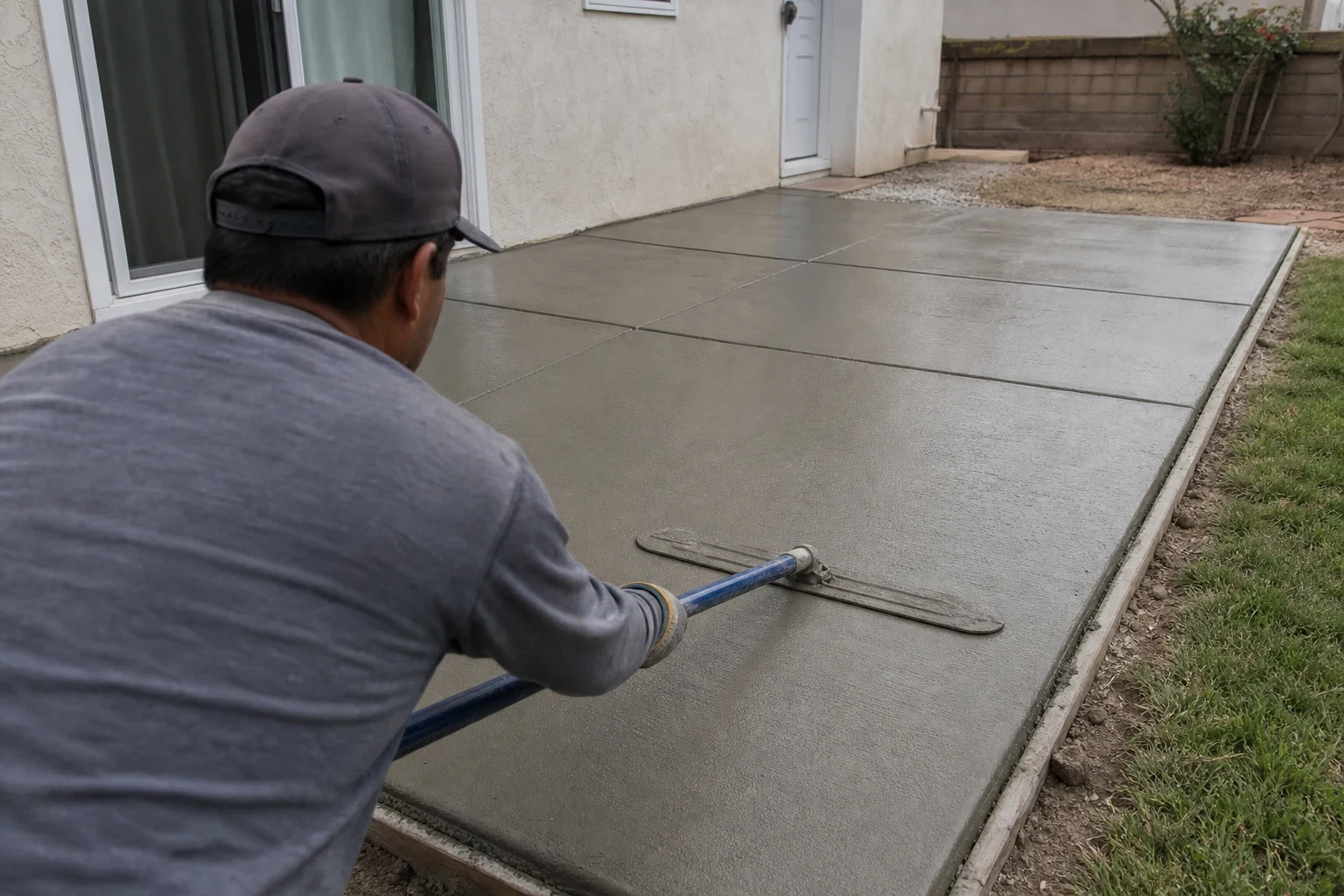
Our patios are pitched to carry rainwater out toward the yard, finished to feel good under bare feet and set on a base that holds steady. We choose the pour date around the forecast, giving the slab mild days to cure before you move the table outside.
A patio built for how you use your yard
A patio is the slab you live on most outside your home: dinners, a grill, a few chairs in the shade. It has to be flat enough for furniture, pitched just enough to shed water, and finished so it is neither slick nor rough on bare feet. We plan each one around those details before any forms go in.
Timing matters as much as the mix. Concrete cures best in mild, steady weather, not in a heat spell or the middle of a winter storm. Here, late winter and spring are a good window for most patios, which puts a fully cured slab under you before the long, dry summer starts. We will tell you honestly if your timeline is tight and what that means for the finish.
We have been pouring concrete for this area's homes for more than 15 years, and that experience shows up in small decisions: joint spacing, base depth, how the edge meets the lawn or planter.
What your patio project includes
- Layout and drainage plan
- Together we outline the patio on the ground, then we set a slight fall that sends rain toward the yard. Most people never feel the slope once they are standing on it.
- Excavation and compacted base
- We dig out soil and roots to the depth the slab needs, then spread and compact gravel. Clay ground expands when wet and shrinks when dry, and a firm base keeps that movement out of your patio.
- Steel reinforcement
- We raise the rebar or wire mesh on plastic chairs before the pour, so the steel stays at mid-depth inside the slab. That is where it carries load and holds sections together, instead of lying useless against the dirt.
- Pour and finish
- The crew places and levels the concrete, then works the surface to a broom texture, smooth trowel or exposed aggregate. For a patterned surface, see our stamped concrete page.
- Joints and curing
- We tool or saw joints on a planned grid, which gives natural shrinkage a tidy path to follow. The slab is then kept moist so it hardens evenly.
- Cleanup
- We haul off forms, excess soil and washout, leaving the yard tidy and easy to walk through.
Signs it is time for a new patio
Puddles that drift toward your walls
Standing water, or runoff heading back at the house, means the slab has the wrong pitch. Pouring a new patio with correct fall solves the cause instead of mopping the result.
Sections that have dropped or tipped
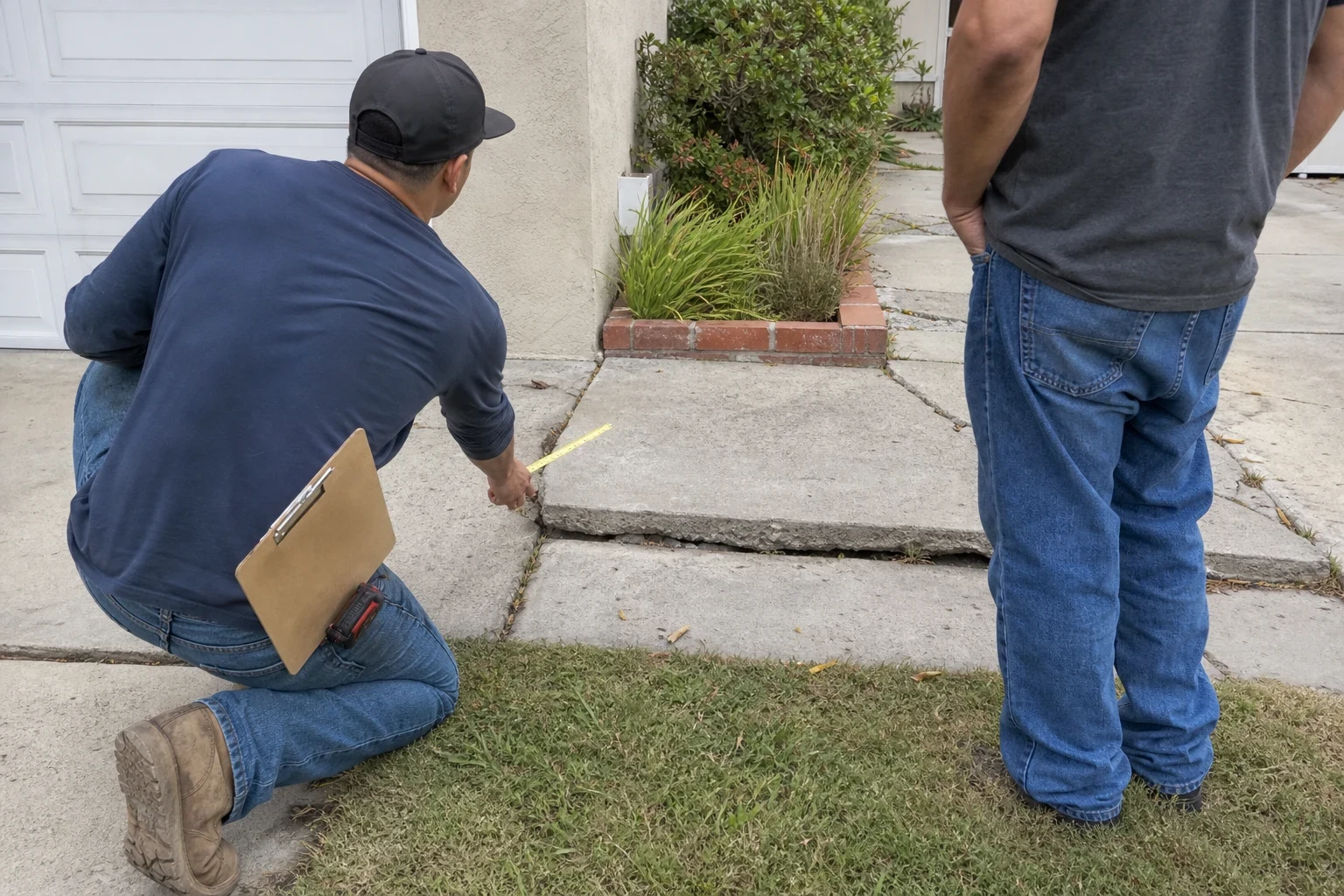
A patio laid on a weak base tends to sink in patches. Chairs wobble, raised edges catch toes, and each rainy season makes it worse.
Cracks that keep growing
Fine hairline cracks are expected. Cracks that widen, step up in height or keep spreading usually mean the ground below has given way.
Mud patches or heaved pavers
Bare ground that goes soggy every winter, or pavers lifted by roots and full of weeds, makes a strong case for a clean concrete slab.
Plans to spend summer outside
If you expect to entertain outdoors this year, starting in spring leaves time for full curing plus any shade or furniture projects afterward.
How a patio job runs
- 1
First call and yard visit
Describe the patio you are picturing over the phone. We then visit to check the soil, measure the space, see how equipment will get in and watch where runoff goes today.
- 2
Written estimate and pour date
You receive an estimate broken out line by line, and we choose a pour date with the forecast in view. When the project needs a permit, we handle pulling it.
- 3
Prep day
Digging, forms, base rock and steel all go in. Before we order concrete, we walk the outline with you one more time.
- 4
Pour day
The concrete is placed and finished in a single session, then joints go in and curing starts. Light foot traffic is usually fine in a day or two, with furniture after roughly a week.
What shapes the price of a patio
We price each patio after seeing the yard in person, never from a chart. The footprint sets a starting point, but the soil underneath and the surface you pick can move the number just as much. Each item appears on your written estimate before any digging starts.
- Footprint and outline
- More square feet means more concrete, more base rock and more hours of finishing. A clean rectangle forms quickly, while sweeping curves and odd angles take extra time to set and brace.
- Demolition and grading
- An old slab or a field of pavers has to be broken up and hauled off. A yard that falls toward the house may need soil moved before the base goes in.
- Getting into the backyard
- When a truck or pump can reach the work area through a wide gate, the pour goes faster. Tight side yards often call for a line pump or many trips with wheelbarrows.
- Surface and color
- A broom finish is the simplest option. Integral color, exposed aggregate and stamped patterns each add material and time on the finishing crew.
- Permits and add-ons
- Certain projects require a city permit. Steps, seat walls or a tie-in to an existing walkway also widen the scope.
Patio questions we hear often
Something not covered here? (714) 455-1826
What is the best time of year to pour a patio here?
Spring and early fall usually give us mild temperatures and dry skies, which concrete likes. Summer pours work with an early start and extra attention to keeping the surface damp. In winter we keep an eye on the forecast and move the date if rain is on the way.
How long before we can use the patio?
Walking on it is generally fine after a day or two. Give it about a week before bringing back heavy furniture or the grill. The slab continues to harden for close to a month.
Will my new patio crack?
Concrete shrinks slightly as it cures, so some cracking is expected. Our joint layout gives those cracks a straight, planned place to form, and the compacted base and steel help keep sections level with each other.
Who stands behind the work once it is done?
Our company is licensed by the California State License Board (CSLB). Each patio we pour carries a 1-year warranty, and we explain its terms in plain language alongside your estimate so you know what is included.
Will a new patio tie in with our existing walkway or pool deck?
It can, and it often does. We regularly join new patios to walkways and sidewalks or to a concrete pool deck so the backyard feels like one space rather than separate pieces. Heights are matched and the pitch carries across the joint, so the edge stays flush underfoot and rainwater keeps draining away from your home.
Get your patio on the calendar
Tell us about the space and when you hope to use it. We will visit, measure and give you a written estimate with a pour date that suits the season.