ServicesWalkways and Sidewalks
Walkways and Sidewalks in Fullerton
We tear out tired, lifted paths and pour new concrete walkways that drain, stay level and feel good underfoot. Each one gets a compacted base, careful jointing and a finish chosen for grip. We schedule the pour around the season so it cures the way it should.
A path you stop noticing, in a good way
A walkway does a quiet job. It links the street, the porch, the side gate and the backyard, and you cross it many times a day. When it works, you never think about it. When a slab has heaved over a root or settled into a low spot, you step around it every day.
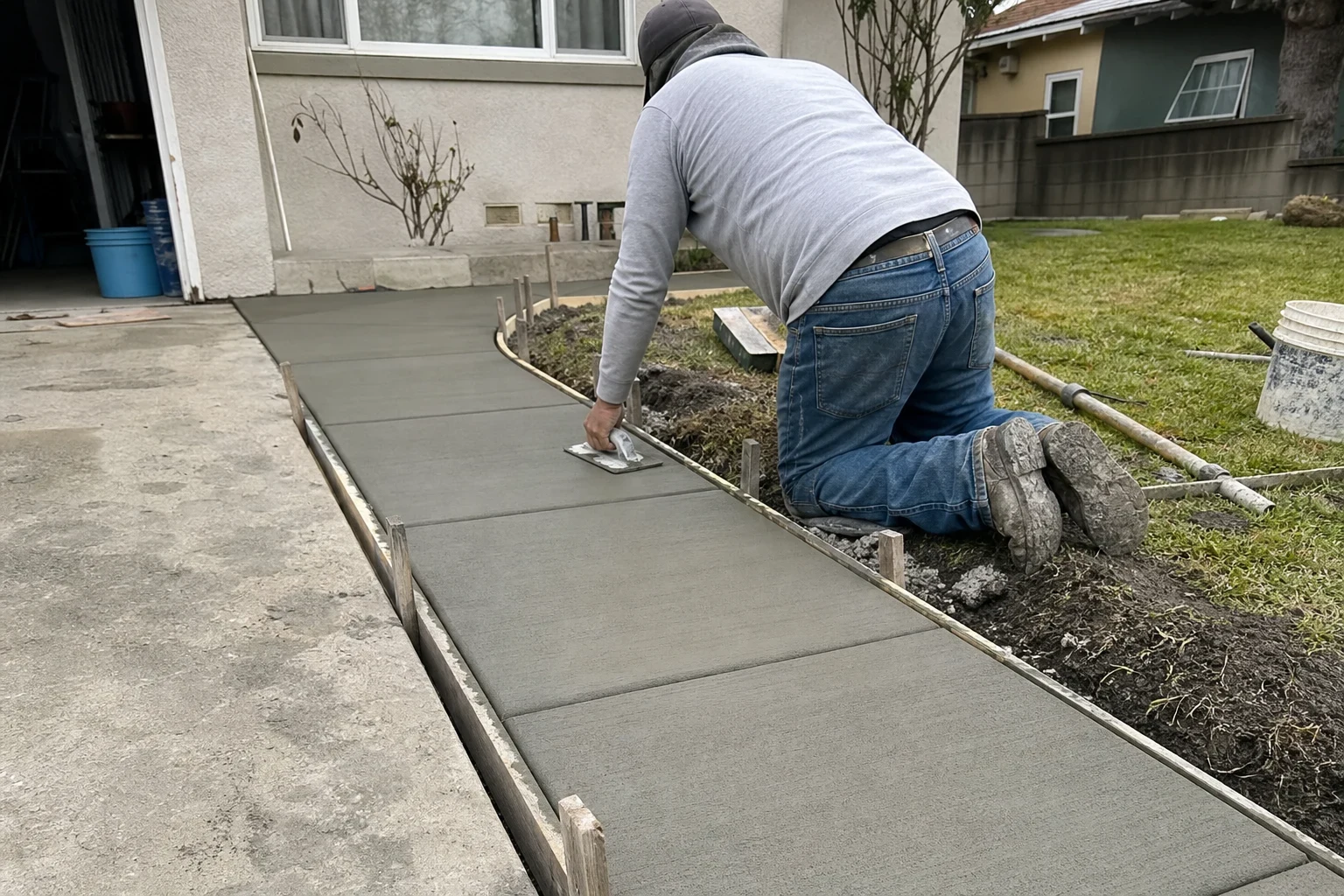
We replace those paths with new concrete built from the ground up: excavation, a compacted base, forms set to a gentle slope away from your home, reinforcement, then a finish that suits the rest of the property. We have been in business for 15+ years, and walkways reward the same patience as larger slabs.
Timing matters more than most people expect. Concrete placed in late-summer heat needs shade and moisture to cure evenly, and a pour right before a winter storm risks a pitted surface. We help you pick a window ahead of the rainy months or the hottest stretch, so the new path is ready when you need it.
What goes into a new walkway
Removal and haul-off
The existing path comes out first, whether it is cracked concrete, loose pavers or a gravel strip, and every piece leaves the property with us. We shield the planting beds and lawn edges beside it while the demolition is underway.
Base and grade
We dig to firm soil, add and compact a granular base, and set the forms so water runs off toward the yard instead of toward your foundation or front step.
Reinforcement and joints
Rebar or wire mesh goes in where the soil or length calls for it. Control joints are cut at measured spacing so any shrinkage cracks follow a straight line where you planned them.
A finish that grips
A light broom finish is the usual choice for sure footing, especially near sprinklers. If you want a more decorative look, we can talk through stamped concrete or a smooth troweled border.
Curing and cleanup
The new slab stays damp or covered through its first days of curing. Once it has set, we strip the wooden forms, fill soil back along both sides and sweep the work area clean.
Signs it is time for a new walkway
Lifted edges you trip on
A slab raised even half an inch by a tree root catches a toe. Grinding or patching rarely holds for long, so a new section with proper base is often the lasting answer.
Puddles or runoff in the wrong direction
Standing water on the concrete a day after a storm, or a stream heading back toward your foundation, means the slope is off. New forms set at the right pitch send it out to the yard.
Cracks spreading across the slab
Random cracks that widen or break into pieces usually mean the base underneath has washed out or settled.
A path that no longer fits how you live
Maybe it is too narrow for a wheelchair or a bin, or it stops short of the side gate. We can widen it, reroute it or extend it.
A city notice about the public sidewalk
Some homeowners receive a notice about a damaged sidewalk in front of the property. We can explain what replacement involves and handle the permit where one is needed.
How a walkway job runs
- 1
A conversation by phone
You tell us about the path, its length and what bothers you about it. We set a time to look at it in person.
- 2
Site visit and written estimate
We measure, check the soil and drainage, note any roots, and give you a line-item estimate. We also suggest a pour date based on the season and the forecast.
- 3
Demolition and forming
Removal, grading, base and forms usually take a day or two depending on length and access. Rebar goes in before the pour.
- 4
Pour and finish
The concrete is placed, struck level, edged and given its final texture in one session while it is still workable.
- 5
Cure and handover
You can walk on it gently in about a day and use it normally within a week. We pull the forms, clean up and walk the finished path with you.
What shapes the price of a walkway
Most of the cost sits in labor, base preparation and the concrete itself. Two paths of the same length can price quite differently depending on what is underneath and how easily we can reach them. We break your written estimate into separate lines, so you see where each part of the money goes before any work starts.
- Size of the path
- A longer or wider walkway takes more yards of concrete and more hours of finishing. If the path will also carry trash bins or a mower, we may pour it a little thicker.
- What comes out first
- Thick old slabs, buried footings or heavy tree roots take longer to remove and haul away than thin concrete or gravel.
- Access to the work area
- A path we can reach with the truck pours quickly. A narrow side yard may mean wheelbarrows or a pump.
- Finish and design
- A broom finish is the simplest. Curves, colored concrete, borders or stamped patterns add forming and finishing time.
- Permits for public sidewalks
- Work in the public right-of-way typically needs a city permit and inspection, which adds a fee and a scheduling step.
Walkway and sidewalk questions
Something not covered here? (714) 455-1826
What time of year is best to pour a walkway?
Spring and fall are easiest on fresh concrete, with mild temperatures and little rain. Summer pours work well too if we start early in the day and keep the slab moist. We avoid pouring right before a winter storm, so it helps to plan ahead of the rainy season.
Will tree roots lift the new walkway again?
Roots can push on any slab over time. We cut back roots where it is safe for the tree, deepen the base and add reinforcement, and we can suggest a root barrier or a slight reroute if a large tree sits right beside the path.
What credentials do you hold for sidewalk work?
We are licensed by the California State License Board (CSLB). That covers new walkways on your property as well as replacing the public sidewalk in front of your home where the city allows it.
Do I need a permit for a walkway on my own property?
A simple walkway on private property usually does not need one. Sidewalk work in front of the house, in the public right-of-way, generally does. We will tell you which applies and pull the permit when one is required.
Is the new walkway covered after you finish?
Yes. Every walkway we pour carries a 1-year warranty. We go over the details with you at the estimate stage, so you know the terms before we break ground.
How soon can we use it?
Light foot traffic is fine by the following day. Give it roughly a week before rolling heavy bins or wheelbarrows across, and keep sprinklers from soaking it for the first few days.
Get your walkway poured before the season turns
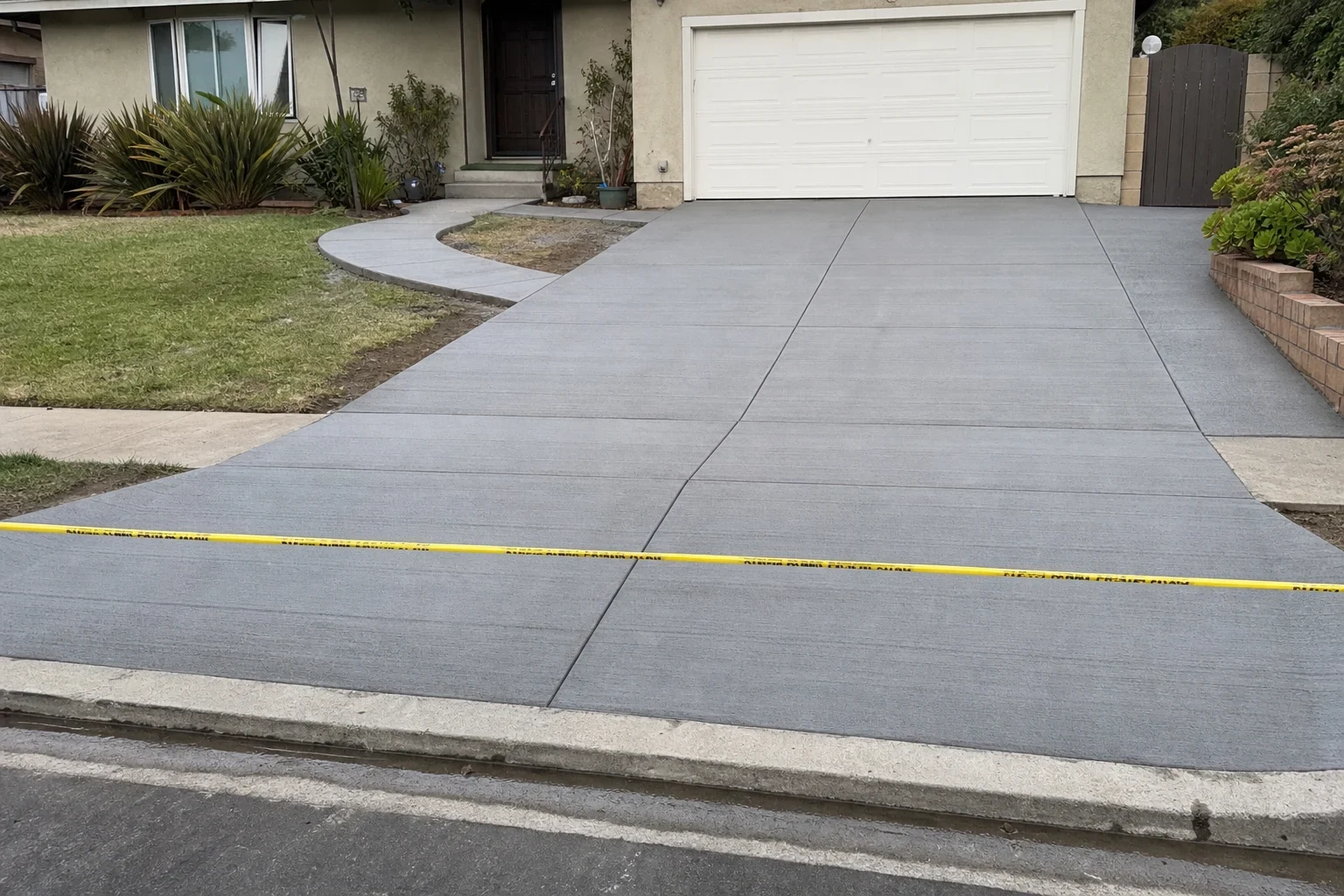
Tell us about the path you have and the one you want. We will look at it in person, give you a written estimate and suggest a pour window that suits the weather.