ServicesSide Yards
Concrete Side Yards in Fullerton
The strip between your home and the fence takes more abuse than most people notice: trash bins, hoses, the AC unit, and runoff from the roof. We pour side yards that slope water away from the foundation and give you solid footing all year.
A narrow space that does real work
A side yard is usually three to eight feet wide, shaded for part of the day and squeezed between a stucco wall and a block or wood fence. Left as dirt or loose gravel, it turns to mud in the wet months, grows weeds by spring and lets water pool against the slab of your home.
A concrete side yard fixes the footing and the drainage at the same time. We set the grade so the surface falls gently away from the house, plan where roof and gutter water will go, and finish the surface so it stays safe to walk on when it is damp. Timing matters too. Pouring in late summer or early fall means the slab is cured and draining before the first winter storms arrive.
What your side yard project includes
Grade and drainage plan
We measure the fall from the foundation to the property line and decide where water should exit. On tight lots that often means a slight cross slope toward the fence or a channel drain along the wall.
Excavation and base
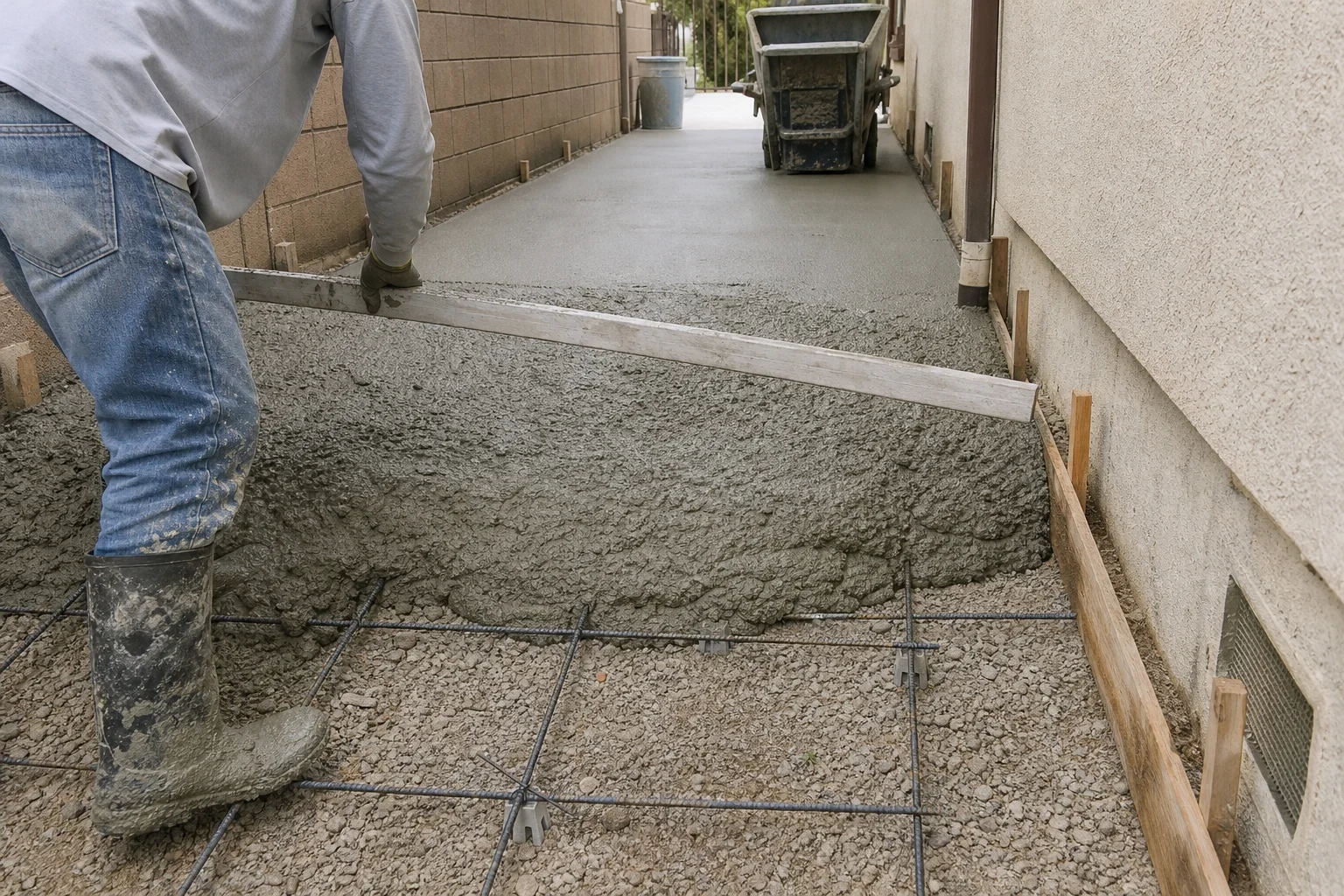
We dig out soil, roots and any leftover rock until we reach firm subgrade. Crushed rock goes in next, run over with a plate compactor in thin lifts. The clay-heavy soil common around here swells and shrinks with moisture, so a dense base carries much of the long-term load.
Forms around what is already there
Side yards rarely run in a straight line. We form around AC pads, gas meters, hose bibs, gate posts and downspouts, leaving clearance where utilities need access.
Steel and planned joints
Rebar or welded mesh goes in, sized to how the ground behaves and what will roll or rest on the slab. Joints are cut at tight intervals along the length, giving natural shrinkage a straight, intended place to show up.
Finish suited to shade and moisture
A light broom finish is our usual choice for side yards because it holds traction on damp, shaded concrete. If the side yard connects to a stamped patio or front walk, we can talk about carrying a matching finish through.
Cleanup and protection
We protect stucco, fencing and plantings during the pour, haul away spoils and leave the area swept.
Signs it is time to pour a side yard
Puddles along the foundation
When rainwater is still standing next to the wall a day after a storm, the ground is tilted toward your home instead of away from it. Given time, that moisture can work under the slab or into the stucco.
Mud tracked through the gate
Rolling bins through soft soil every week wears a rut and brings dirt to the driveway and into your home.
Gravel that keeps migrating
Loose rock spreads, thins out and lets weeds through. Raking it back each season is a sign it is not doing the job.
Old concrete that has sunk or heaved
Sections that tip toward the wall or trip you at the joints usually mean the base underneath failed. Removing and pouring new with a proper base is the lasting answer.
Equipment resting on soil
A pool pump, water heater or AC unit set on bare ground tends to settle out of level and can sit in standing water after a storm. A flat concrete surface keeps it steady and dry.
How a side yard pour comes together
- 1
Site visit and measurements
We walk the side yard with you, note utilities and downspouts, check where water flows today and talk through how you use the space. Afterward you receive a written estimate with every line item spelled out, so nothing is buried in a single total.
- 2
Scheduling around the weather
Most side yards are best poured during our dry stretch, from late spring through fall. We set the date so the concrete has time to cure before winter rain and so the work does not collide with heavy Santa Ana wind days, which dry the surface too fast.
- 3
Demolition, base and forms
Day one is usually excavation, base compaction and forming. Because access is narrow, we often move material by wheelbarrow or a line pump instead of driving a truck to the back.
- 4
Pour, finish and cure
We place the concrete, set the slope, apply the finish and cut joints. Keep foot traffic off for a day or two and wheeled bins off for about a week.
What moves the cost of a side yard
Side yards are long and thin, so square footage only tells part of the story. Access and drainage tend to move the number more than the concrete itself. Your written estimate breaks each item out so you can see where the cost comes from.
- Access to the work area
- A side yard reachable only through a gate or past landscaping may need a line pump or hand placement, which adds labor and equipment time.
- What has to come out first
- Removing old concrete, thick gravel or tree roots takes time and haul-away. A clean dirt strip costs less to prepare.
- Drainage work
- Adding a channel drain, connecting downspouts or tying into an existing drain line adds materials and some digging.
- Obstacles and shape
- Each meter, AC pad, step-down or turn means more forming and finishing by hand.
- Finish and thickness
- A broom finish is the most economical. Matching a decorative finish or thickening the slab for heavy equipment adds to the price.
Side yard questions we hear often
Something not covered here? (714) 455-1826
Will a concrete side yard push water toward my house?
Not when the grade is set correctly. We slope the surface away from the foundation, usually about a quarter inch per foot, and plan where the water exits. If there is not enough room for a natural fall, we add a channel drain.
Is it possible to pour around the AC unit and the gas meter?
It is, and most side yards need it. Our forms wrap around the equipment already in place, and we keep the required open space around the gas meter and any shutoff valves. If a unit is sitting on old blocks, we can add a level pad for it as part of the same pour.
When is the best time of year to do this?
Late summer and early fall work well because the concrete cures in dry, stable weather and is ready before winter storms. Spring is also good. We avoid pouring right before forecast rain or on hot, windy days.
Do I need a permit for a side yard?
Simple flatwork on private property often does not need one, but rules vary by city and change when drainage lines or structures are involved. We check the requirements for your address and handle the permit if one is needed.
What backs the work once it is poured?
Our company holds a license from the California State License Board (CSLB), and we have been pouring flatwork for more than fifteen years, so we are in business 15+ years. Every side yard we finish carries a 1-year warranty, and we walk you through what it covers before the job starts.
Get your side yard ready before the rain
Tell us about the space, the gate and where water goes today. We will set up a visit, measure, and give you a written estimate with a pour date that suits the season.