ServicesGarage Floors
Concrete Garage Floors in Fullerton
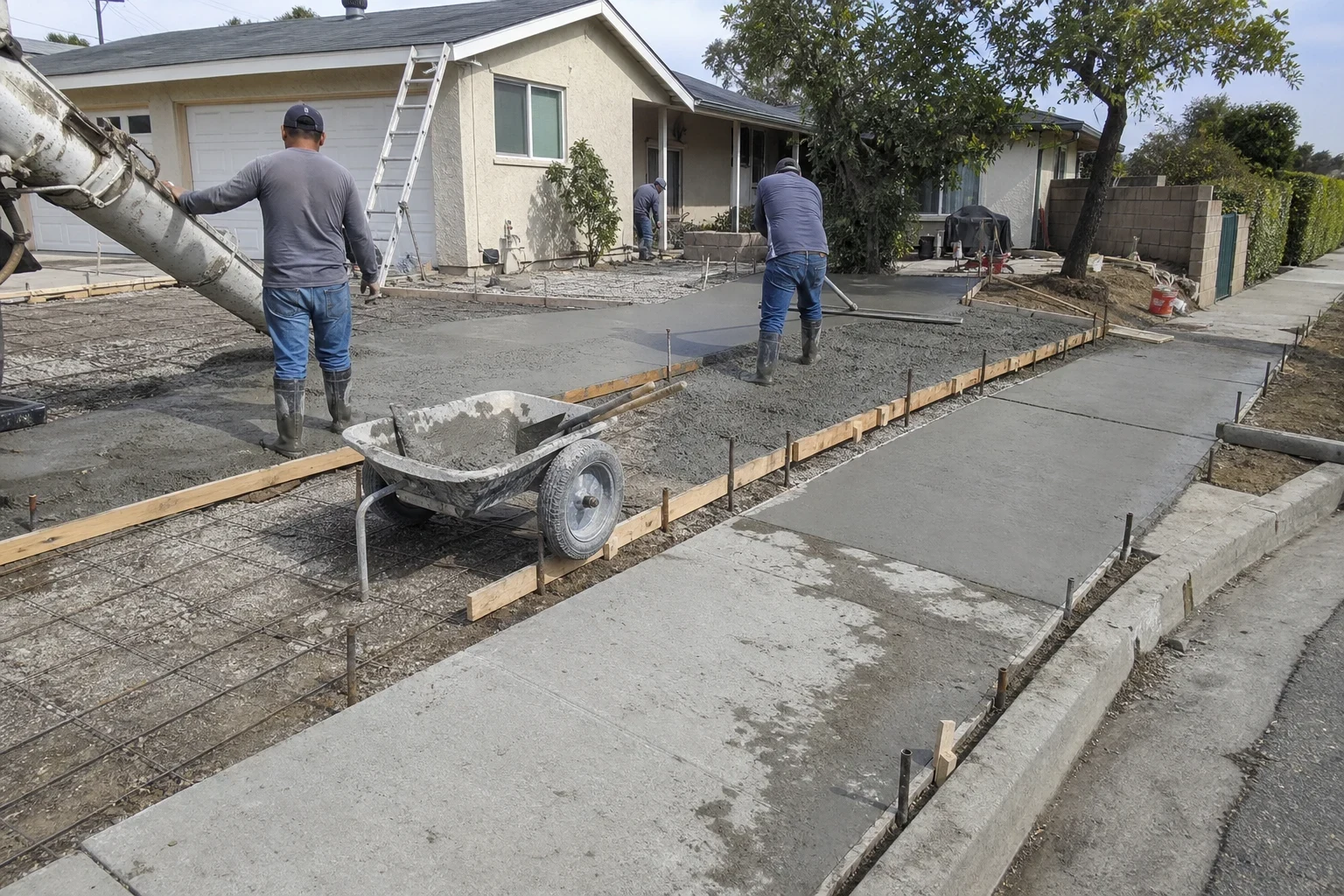
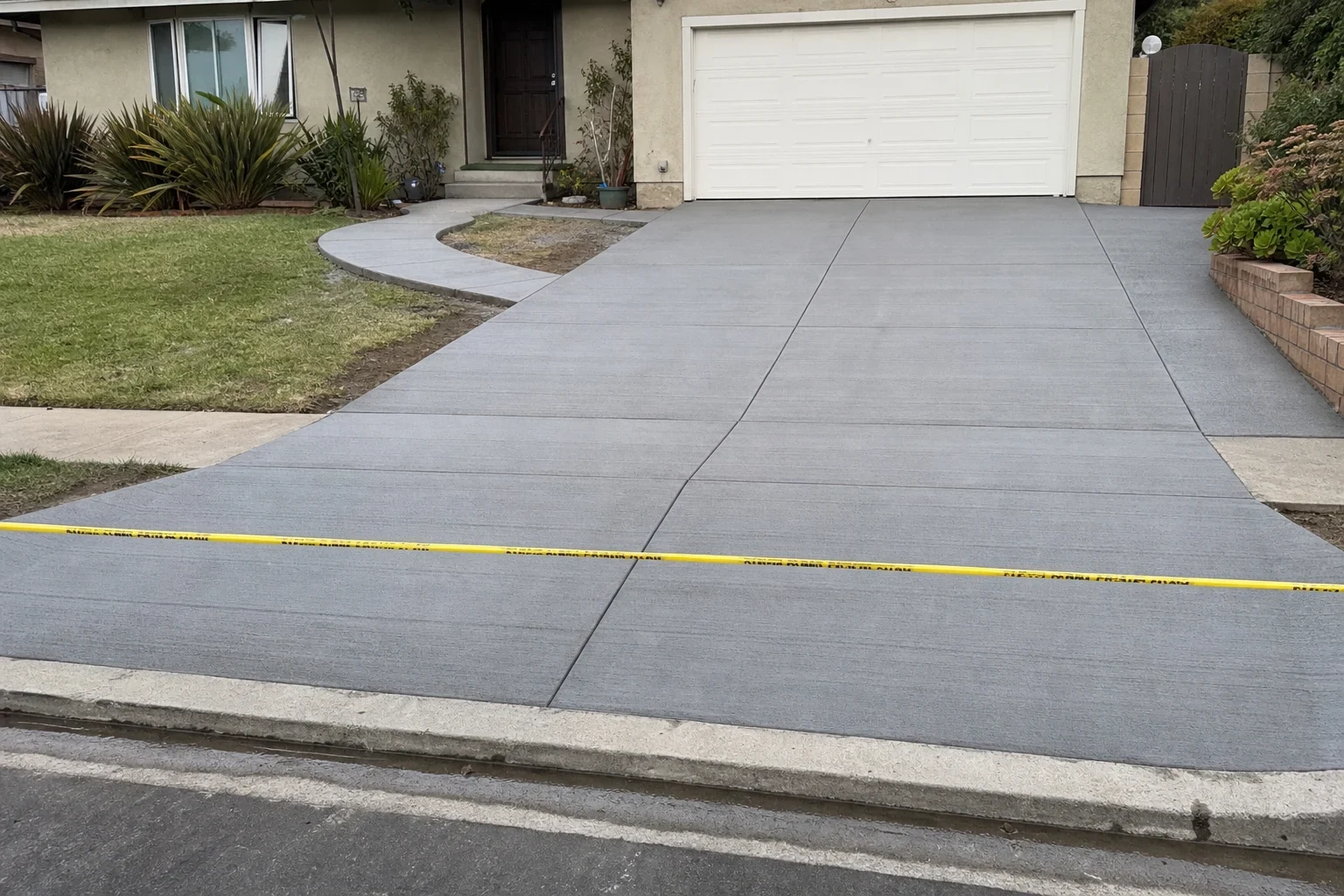
We take out the cracked, sunken or oil-soaked slab and pour a new garage floor on a compacted base, with reinforcement, a slope toward the door and a smooth troweled surface that stays easy to sweep and stands up to daily parking.
A new floor, built from the base up
A garage floor carries more than any other slab at your home. It takes the weight of cars every day, hot tires in summer, dripping oil and the occasional dropped tool. When the old floor has heaved, settled or broken into sections, a fresh pour is usually the cleaner answer than living with it.
Our work is new concrete only. We remove the old slab, correct what is underneath, and place a floor sized and reinforced for how you actually use the space. Many garages around Fullerton were built decades ago on thin slabs over clay soil, so we look closely at the base before we talk about thickness or finish.
Timing matters too. We like to plan garage pours for the mild stretches of spring and fall, and we schedule around the winter rains so the concrete cures evenly instead of rushing or stalling.
What your garage floor includes
- Removal and haul-off
- We break up the existing slab, load the pieces and haul them away. Walls, the door track and the driveway are covered and protected while we work.
- Base preparation
- We grade and compact the ground, bringing in fresh aggregate wherever the soil is soft or uneven. That firm footing is what keeps the new floor from sinking the way the old one did.
- Reinforcement and vapor barrier
- Rebar or welded wire sits on small chairs so the steel is held at mid-depth of the slab instead of resting on the dirt. Where ground moisture is a concern, a vapor barrier goes down first.
- Slope and edge detail
- We set a gentle fall toward the garage door so rinse water and runoff drain outside. An expansion strip separates the slab from the foundation.
- Troweled finish and control joints
- A steel trowel gives the surface a dense, smooth finish that sweeps clean. We then saw joints so normal shrinkage shows up as straight, orderly lines.
- Curing and cleanup
- The slab is cured in a way that suits the season, and we leave the garage swept and the work area tidy.
When a garage floor is ready to be replaced
Offset cracks
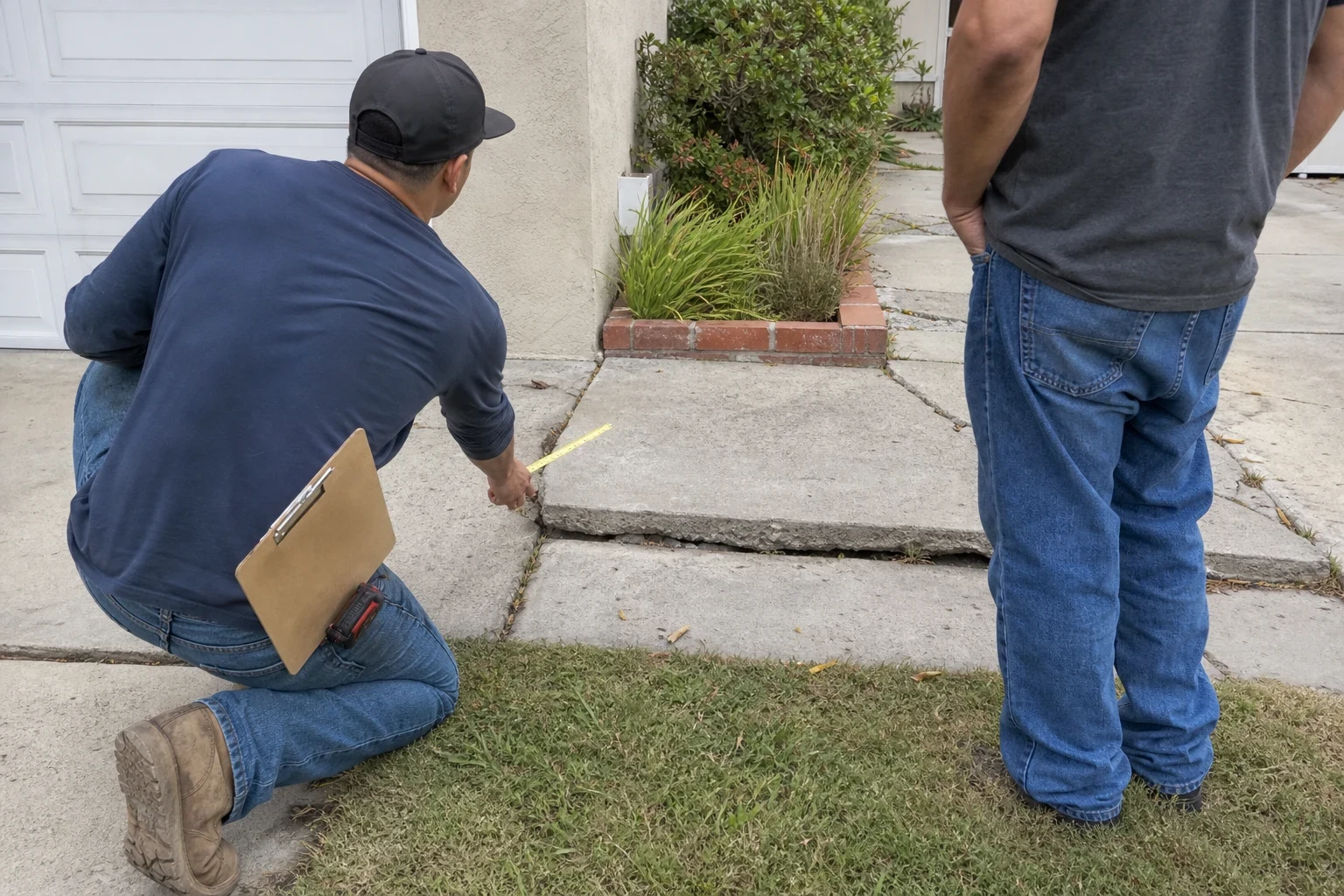
Thin hairline cracks are expected in any slab. When one side of a crack sits higher than the other, the soil underneath has moved and sections of the floor have lost their support.
Water drifts toward the house
If hose water collects in the center or runs back toward the interior door, the floor has settled and lost its slope.
Flaking, pitting and dust
A surface that scales, pits or stays gritty no matter how often you sweep has a worn top layer, and coatings will not bond to it.
Oil that has soaked in for years
Dark stains and soft patches where the car has always parked can mean the concrete itself has weakened.
Daylight under the door seal
When the slab has dropped at the threshold, the garage door can no longer close tight, and dust, leaves and pests find their way in.
Plans for heavier use
A bigger truck, a workshop or a home gym may need a thicker, more heavily reinforced floor than the one your home came with.
What moves the cost of a garage floor
No two garages price out the same, so we quote after looking at yours in person. Most of the difference comes from how much has to be removed and the shape the ground is in once the old slab is gone. Each part appears as its own line on your estimate, so the total does not change on you later.
Size and thickness
A two-car garage needs far more concrete than a single bay. Going thicker for a heavy truck or workshop equipment adds both material and labor.
Removing the old slab
Older floors that are extra thick, heavily reinforced or poured over an earlier slab take more time to break up and haul off.
Soil and base condition
Where the soil is soft or swells with moisture, we may dig it out and replace it with compacted aggregate before the pour.
Access and placement
When the driveway is open, the truck chute can reach the garage directly. Tight or blocked access may call for a pump or wheelbarrows.
Finish and sealer
A smooth steel-trowel finish is our standard. A penetrating sealer, or a broom texture at the door apron, adjusts the scope a little.
How the work runs
- 1
A walk-through and written estimate
We look at the slab, the soil at the edges, the door threshold and how the driveway meets the garage. You get a line-item estimate that shows removal, base work, reinforcement and finish separately.
- 2
Scheduling for the weather
We choose pour dates that miss rain and the hottest afternoons. If the job needs a city permit, we pull it and arrange the inspection.
- 3
Demolition and base
The old floor comes out, then we grade, compact and set the reinforcement. Larger garages or tight access can stretch this stage to a second day.
- 4
Placing and finishing
We place the concrete, screed it to slope, trowel the surface and cut the joints when the slab is ready for them. Then it is covered or treated so it cures slowly.
- 5
Back in the garage
Foot traffic is fine after a few days. We let you know when it can take a car, typically around a week, depending on the mix and the weather.
Common questions about garage floors
How long before I can park in the garage again?
Plan on about a week before a car rolls back onto the new slab, and a little longer if the weather turns cool. Walking across it is usually fine after two or three days. The concrete keeps gaining strength for roughly a month, so save floor jacks and jack stands for later.
Do I need to empty the garage?
Yes, the garage needs to be fully cleared before demolition begins. Many people move things to a side yard, a portable storage container or a neighbor's garage for the week. We confirm your dates well ahead of time so there is room to plan.
When is the best time of year to replace a garage floor?
Spring and fall give the steadiest curing conditions. Summer pours go well when we start early in the morning and keep the surface moist. In winter we build the schedule around forecast rain.
Will my new floor crack?
Every slab loses a small amount of volume as it dries. We saw control joints at planned spacing so that movement follows straight lines we chose, rather than wandering across the floor. A well-compacted base and properly placed steel keep the new slab from heaving or sinking the way the old one did.
Who stands behind the work?
Our company is licensed by the California State License Board (CSLB), and we have been in business for over 15 years. Each garage floor we pour comes with a 1-year warranty on our work.
Can you tie the new floor into my driveway?
We set the elevation at the door so the step from garage to driveway is smooth. If the driveway also needs replacing, we can plan the two pours together; our Driveways page explains that work.
Ready for a floor that drains and stays level
Tell us about your garage, how you use it and when you would like the work done. We will set up a walk-through and talk through timing before the next season turns.