ServicesRV Parking Pads
Concrete RV Parking Pads in Fullerton
Your motorhome, trailer or boat needs ground that stays flat under heavy, concentrated loads. We pour RV pads with added depth, a steel rebar grid and a base compacted in layers, scheduled for dry weather and cured slowly so the slab holds up season after season.
A pad made for a heavy vehicle, not a car
An RV puts far more weight on the ground than a sedan, and it concentrates that weight on a few tires and leveling jacks. A standard four-inch walkway slab is not made for it. We plan the pad for the vehicle you actually own, with extra thickness, a rebar grid and a base compacted in layers so the ground underneath stays put.
We also think about the season you will be parking through. Winter rain softens unprepared soil, and that is when ruts and sinking show up. A pad poured in the dry months is ready before the wet ones. Our team has been doing this work for more than 15 years, and that time shows mostly in the parts you never see once the concrete is down.
The work behind a lasting RV pad
A footprint planned around your vehicle
We take the dimensions of the motorhome, trailer or boat you have and plan the slab with room to open doors, extend slide-outs and walk all the way around. We also map the path from the street or driveway so pulling in becomes an easy, everyday move.
Digging out and building the base
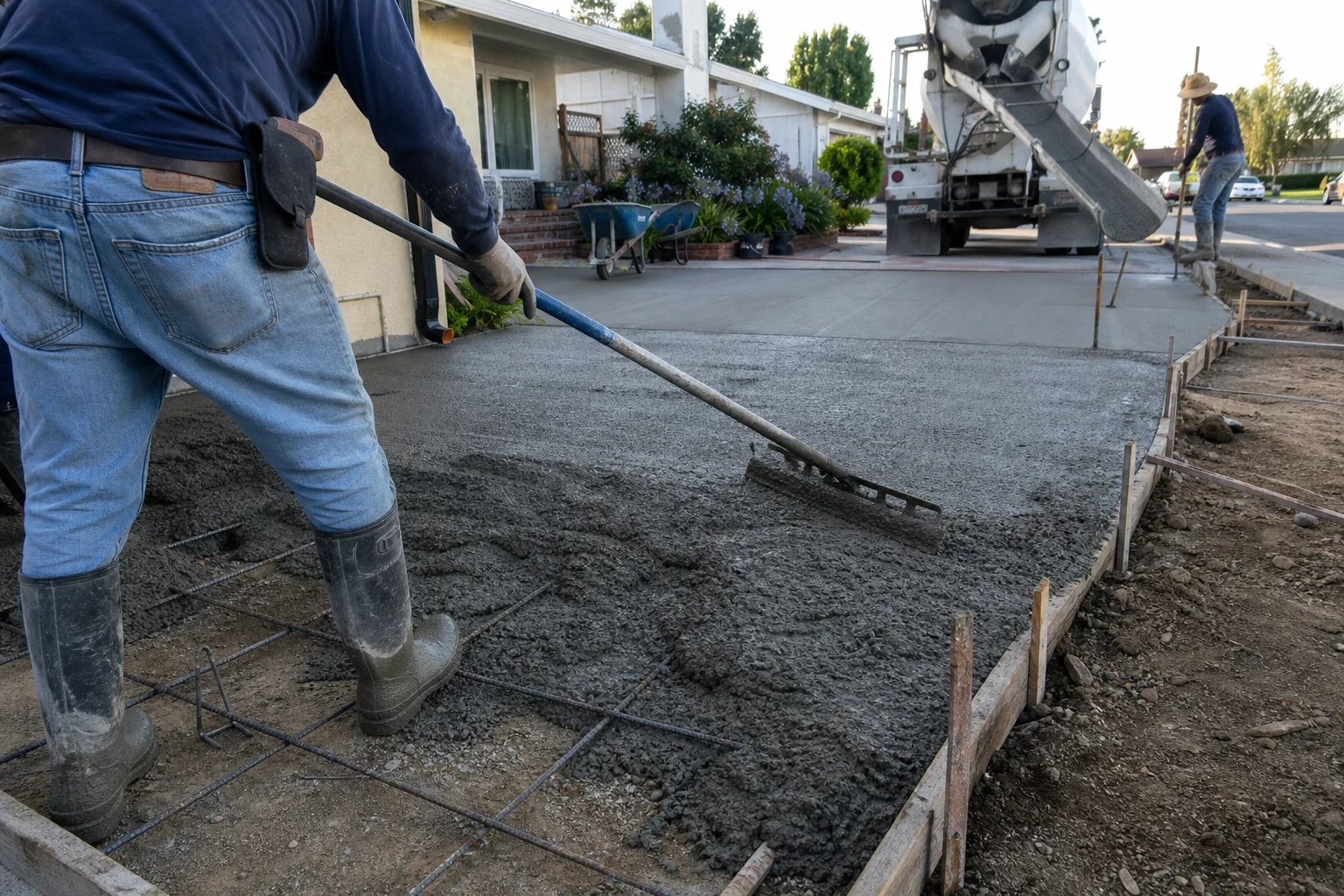
Turf, roots and loose dirt are removed first. Aggregate base goes down next and is compacted a few inches at a time, the step that stops the slab from settling under tires and jacks.
Extra depth and a rebar grid
The pad is poured thicker than patio concrete. We tie rebar into a grid and lift it on chairs so the steel sits in the middle of the slab, where it does its real work.
A gentle pitch for runoff
The finished surface tilts slightly so rainwater flows away from your home and doesn't pool beneath the vehicle.
Planned joints and broom texture
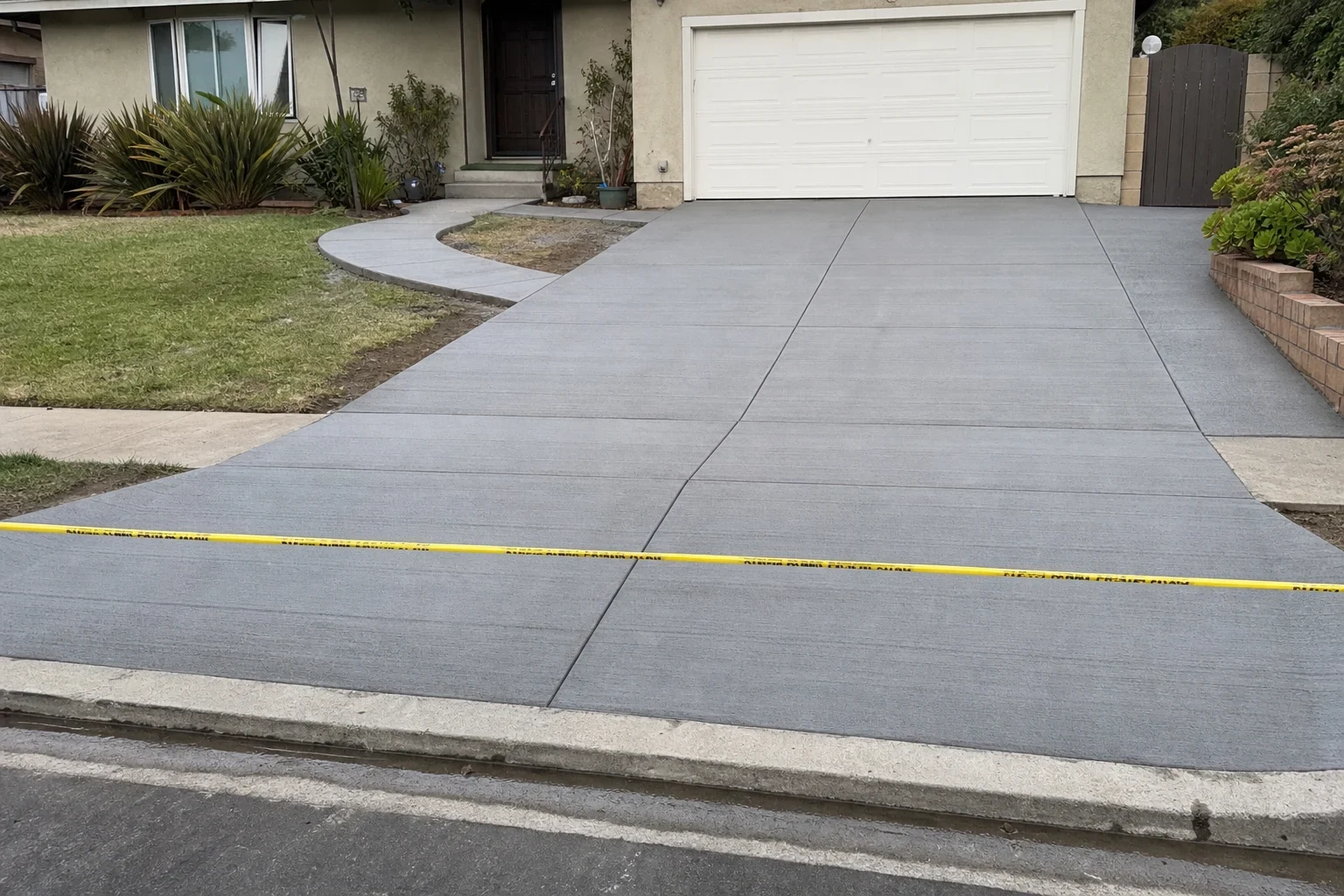
Control joints are saw-cut in a laid-out pattern, giving shrinkage a neat place to go rather than a random crack. A broom finish gives you sure footing on dewy mornings and while you hitch up.
A clean site and curing advice
We haul off the forms, spoils and scraps and rinse the area before leaving. You also get a clear curing schedule; with a heavy rig, expect to wait about four weeks before parking.
When an RV pad makes sense
Tire ruts that hold water
Each time you park, the tires press a little deeper into the lawn or gravel, and puddles collect in the grooves. The ground underneath simply cannot carry that load.
Extra blocks just to get level
Stacking more blocks under the jacks every trip means the surface has shifted. A flat, properly sloped pad turns leveling into a quick job.
Cracks where the tires rest
Driveways and side slabs poured at ordinary thickness tend to break right under RV wheels. A pad built for the weight takes over that job.
Damp soil around the undercarriage
Parking on dirt keeps tires wet and gives weeds and pests a home beneath the vehicle. Concrete keeps the space clean and dry.
A bigger rig on the way
Ordering a new trailer or motorhome is a good cue to plan a pad that fits it, ideally poured before it arrives and before the rainy months.
How your RV pad job runs
- 1
Phone call, then a site visit
It begins with a phone conversation. Then we come out to see the spot, the access route and your vehicle, and follow up with a written estimate listing the base, slab thickness, reinforcement and finish.
- 2
Permits and weather-minded scheduling
When the work calls for a city permit, such as a new approach from the street, we handle pulling it. Pour days are chosen clear of rain, and in summer we start at first light so finishing wraps up before the afternoon heat.
- 3
Excavation, forms and base
Digging out, setting forms and compacting the base generally fill one to two days, longer for large pads or tight access. We set the rebar and check its height before any concrete truck arrives.
- 4
Pour, finish and cure
The concrete is placed, struck off to the planned slope, broomed for texture and jointed. After that we keep the surface damp or spray a curing compound, so the slab gains strength evenly through its first weeks.
What shapes the price of an RV pad
Every pad is priced from the site, so we do not quote a number until we have seen it. The written estimate breaks out each part of the job so you can see where the cost comes from and decide what matters to you.
- Size and thickness
- A pad for a large motorhome needs more area and more depth than one for a small trailer, and that means more concrete and steel.
- Access for trucks and equipment
- Narrow side yards, gates or walls can mean pumping concrete or wheeling it in, which adds labor.
- Soil and existing surface
- Removing old asphalt, a cracked slab or deep soft soil adds demolition and base material before the pour.
- Street approach and permits
- Cutting a new curb approach or working near the public sidewalk usually needs a permit and extra work to city standards.
- Finish choices
- A broom finish is standard. Color or a decorative border tied in with stamped concrete raises the cost.
Common questions about RV pads
Something not covered here? (714) 455-1826
How thick should an RV pad be?
Ours run deeper than a patio or walkway slab, with rebar throughout. The final depth comes from two things: how much your vehicle weighs and what the soil looks like once we dig. Your written estimate spells out the thickness we recommend and why.
How long before I can park the RV on it?
Foot traffic is fine after about a day, and a car can use it after roughly a week. A heavy motorhome or a loaded trailer should wait about four weeks, which gives the concrete time to reach its design strength.
Does the city need to approve an RV pad?
If the slab stays fully inside your property line, a permit is often not required. Cutting into the curb or adding a new approach from the street is different and typically does call for one. Some local rules also limit where an RV can be stored, so that is worth a check early on. We pull whatever permit the job needs, and we are licensed by the California State License Board (CSLB).
When is the best time of year to pour?
The stretch from late spring into early fall gives the steadiest pour days. We schedule around rain and plan for heat with early starts and careful curing. Getting the pad in before the wet months means it is ready when soft ground would otherwise cause trouble.
Is the work covered after it is done?
Yes. Your RV pad comes with a 1-year warranty. We go over what that covers while we review the estimate with you, so nothing is unclear down the road.
Can the pad connect to my existing driveway?
In most cases, yes. We join the new slab to the old one with a proper joint, which lets each surface move on its own without cracking the other. If you would like to redo the whole approach, our driveways page describes that work.
Get your RV pad poured before the rains
Tell us about your vehicle and where you want to park it. We will talk through size, timing and access, and set up a visit so you get your quote by phone and in writing.