ServicesStamped Concrete
Stamped Concrete in Fullerton
Stamped concrete gives you the look of slate, flagstone or brick in a single poured surface. We plan the color, pattern and pour date together, then stamp and seal it so the finish holds up through the next dry summer and wet winter.
A Patterned Surface Poured as One Piece
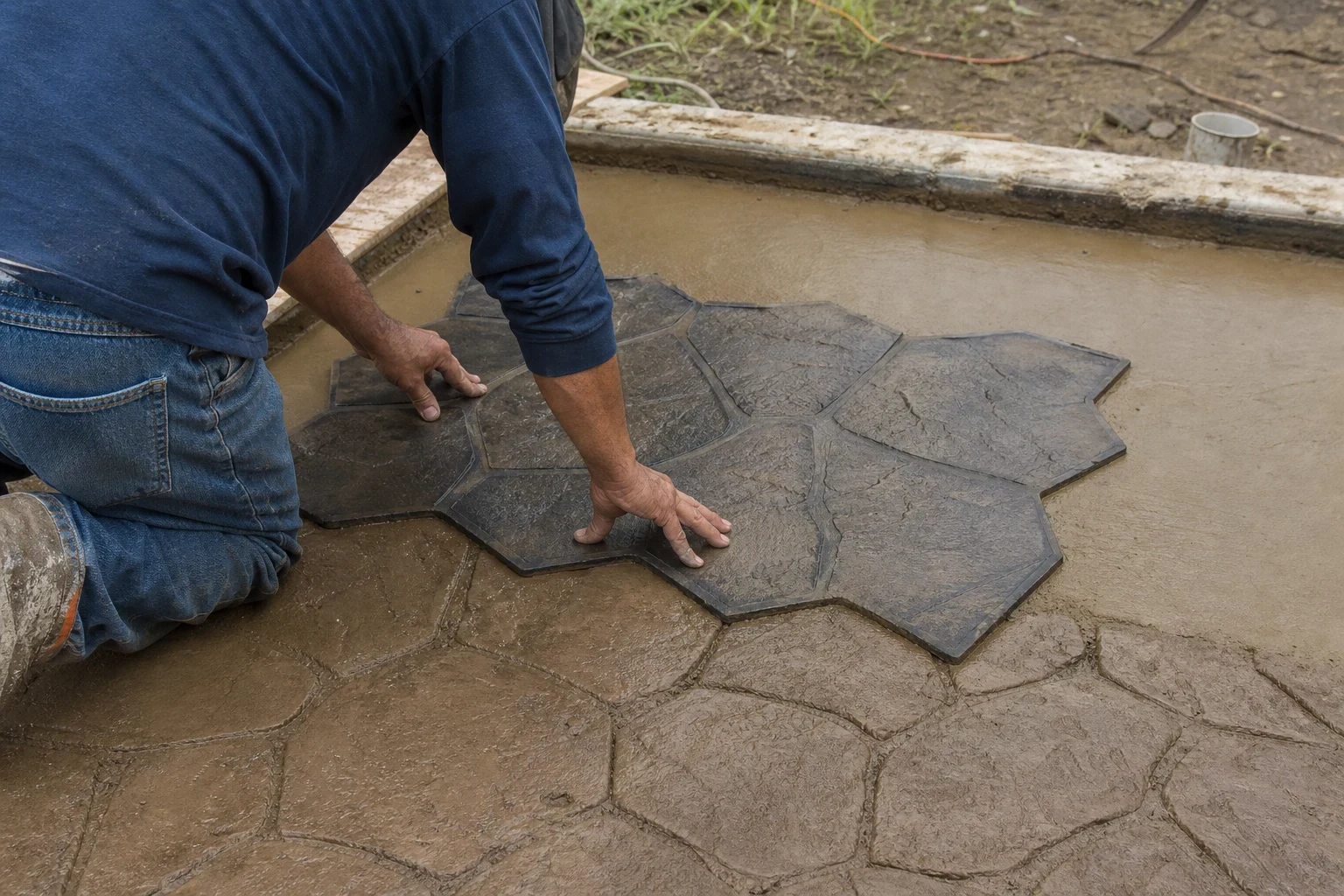
Stamped concrete is fresh concrete that we color, texture and press with patterned mats while it is still workable. The result reads like stone or brick but has no individual pavers to shift, settle or sprout weeds between. It suits patios, front walks, courtyards, pool surrounds and driveways where you want the outdoor space to feel finished rather than utilitarian.
Timing matters more with stamping than with a plain broom finish. The crew has a short window between pour and set, and warm afternoons or a dry wind shorten it. We schedule stamped work for the cooler parts of the day and the calmer stretches of the year, so the pattern goes in crisp and the color sets evenly.
Being in business 15+ years has taught us how stamped color behaves on a hot afternoon compared with a damp morning. We are licensed by the California State License Board (CSLB), and every stamped surface we finish comes with a 1-year warranty.
What Your Stamped Concrete Project Includes
- Pattern and color selection
- We bring sample mats and color charts so you can see ashlar slate, cobblestone, wood plank and other patterns against your home's stucco, trim and roof. Most people choose a base color plus a darker release color that settles into the joints and gives the stone its depth.
- Excavation and compacted base
- We remove the old surface or sod, grade for drainage away from the house and compact a gravel base. A good pattern on a soft base will not last, so this step gets the same attention as the finish.
- Reinforcement and forms
- Rebar or wire mesh goes in according to the slab's use, with heavier reinforcement under driveways. Forms are set to the final shape, including curves and steps.
- Pour, color and stamp
- Integral or broadcast color goes in with the pour, then the crew presses the mats in sequence and hand-tools the edges the mats cannot reach.
- Control joints and sealing
- We cut control joints where the pattern can hide them, wash off the release powder and apply a sealer that deepens the color and resists stains from leaves, oil and pool chemicals.
Signs Stamped Concrete Is the Right Call
Your plain slab feels unfinished
A gray broom-finished patio works, but it rarely matches the rest of the yard. If you are already replacing it, stamping adds texture and color in the same pour.
Pavers keep shifting or growing weeds
Loose pavers and sunken bricks are trip hazards and weekend chores. A single stamped slab gives a similar look with no joints for weeds to root in.
Old concrete is cracked through
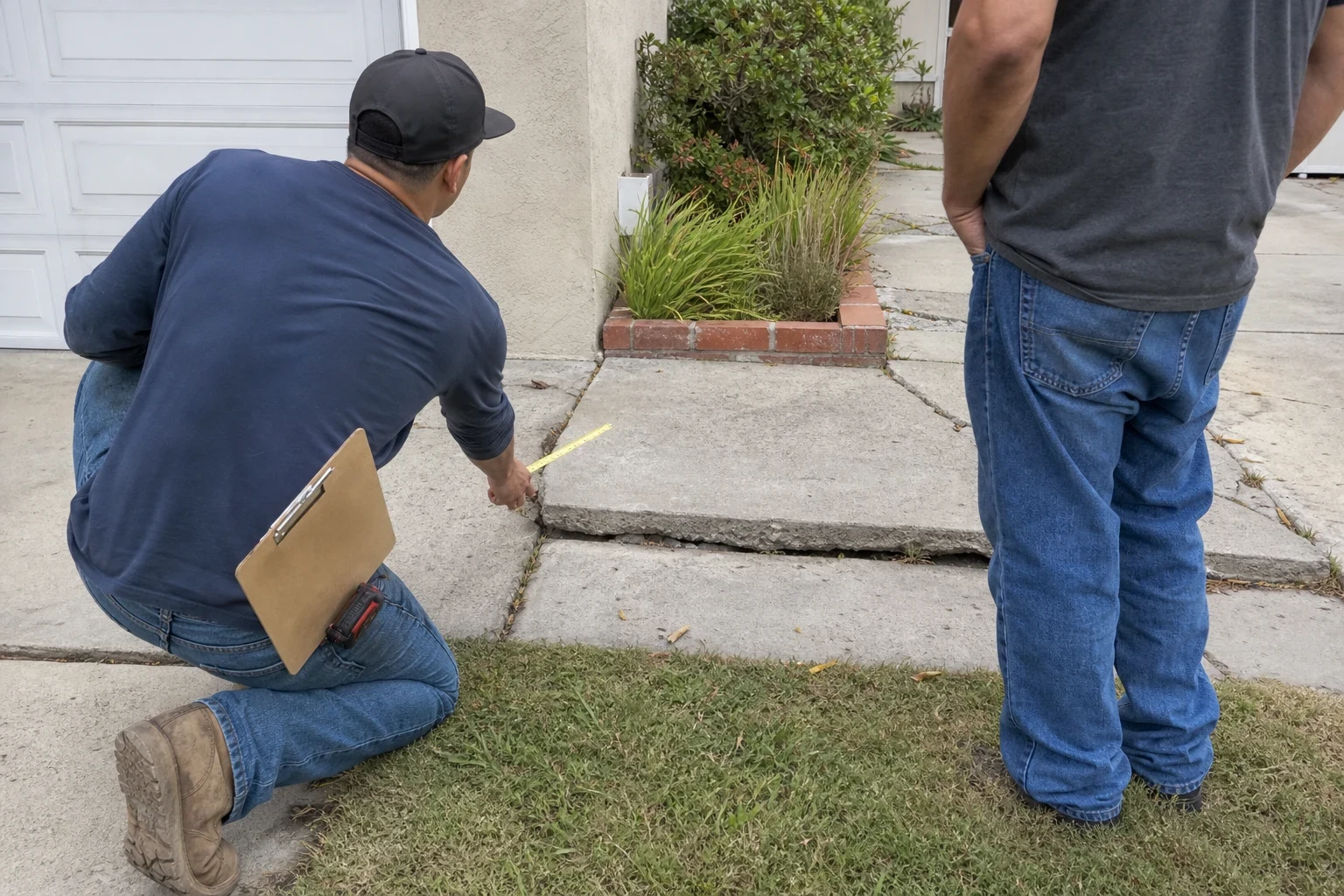
When a patio or walk has heaved, broken into sections or pulls water toward the house, removal and a new pour is usually the honest answer. That is the moment to choose a pattern.
You are planning outdoor living before summer
If you want a finished patio or pool deck ready for the long dry months, spring is the time to plan. Cooler mornings give the crew a better stamping window.
What Shapes the Price of Stamped Concrete
Stamped concrete costs more than a plain finish because of the color, the mats, the extra hands on pour day and the sealer. The written estimate puts each of those on its own line, so nothing hides inside one lump number. We are glad to price a plain border with a stamped field, or the reverse, if you want to compare.
Area and shape
Larger, simple rectangles stamp efficiently. Curves, narrow strips and lots of edges need more hand texturing.
Pattern and color layers
A single color with one pattern is the most direct option. Multiple colors, antiquing release and border bands add material and labor.
What comes out first
Any existing concrete or turf has to be broken up and trucked off before we can grade. Soft spots or clay-heavy soil get dug out and replaced with compacted gravel, which can add a day of prep before the pattern work starts.
Access to the work area
A backyard reached only through a side gate may need a concrete pump or wheelbarrow runs, which changes crew size and equipment.
Slab thickness and use
Driveways and RV areas call for thicker concrete and heavier reinforcement than a patio or garden path.
How a Stamped Pour Day Runs
- 1
Site visit and layout
We walk the area with you, measure, check how water drains and mark the shape. You leave the visit with a written estimate listing each part of the job.
- 2
Prep day
The crew excavates, compacts the base, sets forms and places reinforcement. If a city permit applies, as it often does for driveway approaches, we pull it before this step.
- 3
Early-morning pour and stamp
We start early so the concrete sets during the cooler hours. Stamping usually begins within a few hours of the pour and moves quickly while the surface is at the right firmness.
- 4
Wash, cut and seal
After a day or two we wash off the release powder, cut joints and apply sealer once the surface is dry. Plan on staying off it for about a week before light foot traffic is comfortable and longer before driving on a stamped driveway.
- 5
Cleanup and walkthrough
We haul away debris, rinse the work area and go over care and resealing with you before we leave.
Stamped Concrete Questions
Is stamped concrete slippery around a pool?
Smooth, glossy sealer can be slick when wet. For pool decks and steps we choose patterns with more texture and add a fine anti-slip grit to the sealer. You can see and feel the difference on a sample before deciding.
How often does stamped concrete need resealing?
Most sealers need a fresh coat every few years, sooner on surfaces that get full afternoon sun or regular pool splash. Resealing brings the color back and keeps stains from soaking in. We will tell you what to watch for at the walkthrough.
Will stamped concrete crack?
All concrete can develop hairline cracks as it cures and moves with the soil. We place control joints along pattern lines so any cracking follows a planned path and stays hard to spot. A compacted base and proper reinforcement do most of the work here.
Can you stamp over my existing patio?
We pour new concrete for stamped work rather than stamping over old slabs. That lets us correct the base and drainage underneath, which is usually why the old patio failed in the first place.
When is the best time of year to pour?
Mild spring and fall weather gives the most forgiving stamping window. Summer works well with early starts, and we plan around winter rain so fresh color is not marked by a passing storm.
Is the work covered after it is finished?
Yes. Each stamped surface we install is backed by a 1-year warranty. During the estimate visit we go over the terms in plain language, so you know exactly what is included before any work begins.
Choose Your Pattern Before the Season Turns
Tell us where the stamped surface will go and how you plan to use it. We will talk through patterns, colors and a pour date that suits the weather.