ServicesConcrete Slabs
Concrete Slabs in Fullerton
Sheds, hot tubs, condensers and outdoor rooms all need firm, flat ground beneath them. We excavate to solid soil, compact a crushed base, place steel where it belongs and finish the concrete true, so what you set on it stays level season after season.
A level base for whatever comes next
Most slab problems start below the concrete. Soft fill, a thin pour or missing reinforcement lets a slab settle at one corner, and then the shed door binds or the spa tilts. We spend most of our care on the parts you never see: excavating to firm soil, placing and compacting crushed base, and setting rebar on supports so it ends up in the middle of the pour instead of lying in the dirt.
We pour slabs for sheds and workshops, hot tubs, pool equipment, air conditioning condensers, generators, trash enclosures and simple outdoor living areas. If you want the slab to become a finished patio or a stamped surface later, we plan the thickness and edges with that in mind, and our patios and stamped concrete pages cover those finishes in more detail.
Timing matters too. We schedule pours around the season, so a slab meant for a spa or a new shed is cured and ready before you need it, not rushed through a hot afternoon or a wet week.
What every slab includes
- Layout and grade check
- We mark the footprint, confirm it is square and set the finished height so water drains away from your home and any nearby walls.
- Excavation and base
- We remove sod, roots and loose soil, then place crushed base in lifts and compact each one. This is the step that keeps a slab from sinking at the corners.
- Forms and reinforcement
- Straight wood forms define the edges. Rebar or wire mesh is set on chairs so the steel sits inside the concrete where it can actually hold cracks together.
- Pour and finish
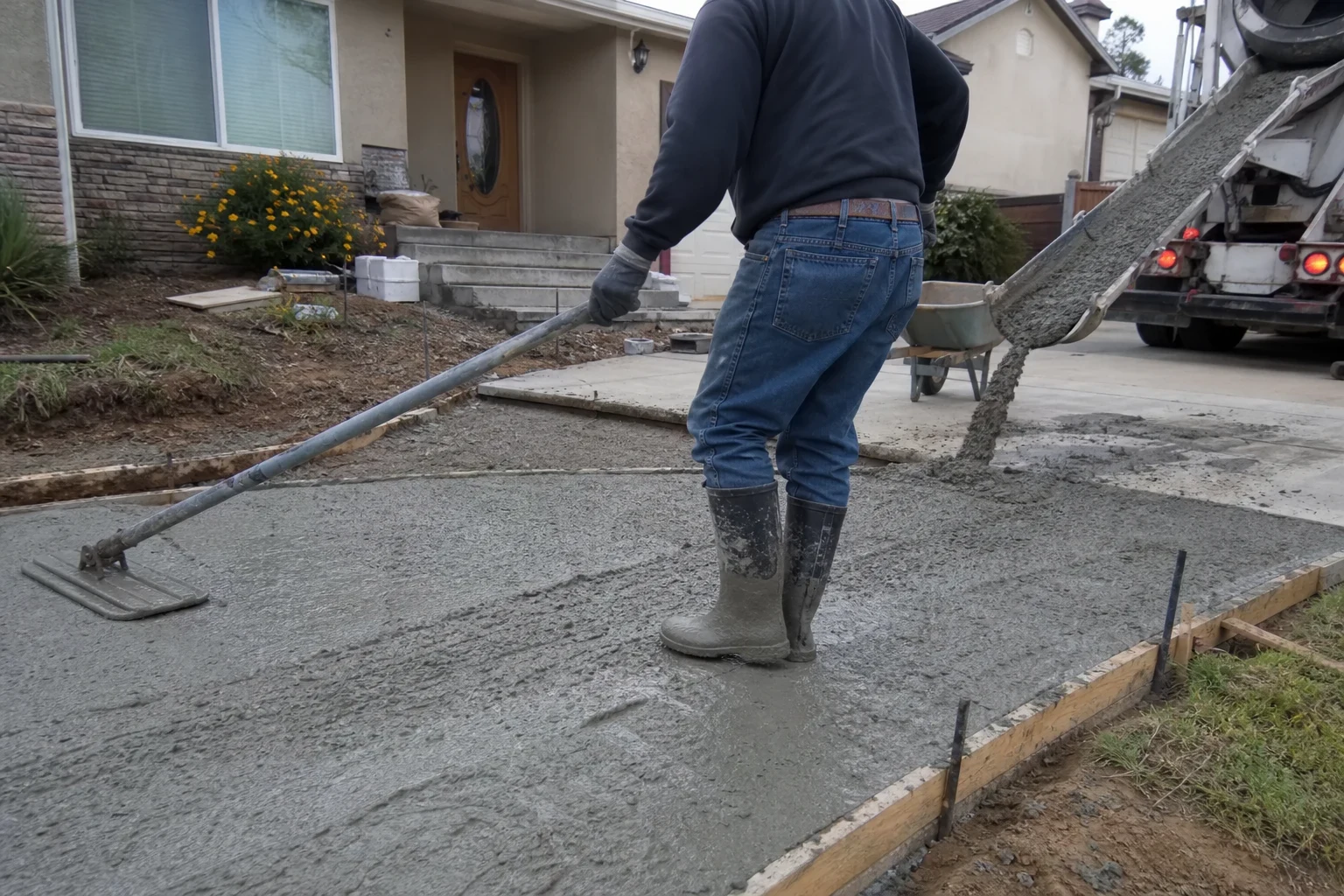
- We place the concrete, screed it flat and finish the surface to suit its use: a smooth trowel for a workshop floor, a light broom texture for outdoor footing.
- Control joints
- Joints are cut or tooled at planned spacing so the natural shrinkage of concrete shows up as a straight line in the joint, not a random crack across the middle.
- Cleanup
- Forms come out, edges are backfilled and leftover material is hauled away. Your yard is left tidy.
When a new slab makes sense
The shed rests on soil or loose blocks
A wood floor sitting on dirt or shifting pavers holds moisture and slowly racks out of square. Concrete underneath keeps it dry and stable.
You have a hot tub on order
Once filled, a spa weighs several tons. Most makers ask for a flat, reinforced base, and gravel or pavers seldom spread that weight evenly.
Your condenser or pool pump leans
Equipment that sits off level puts stress on its lines and connections. A proper pad sets it back square.
An existing slab has failed
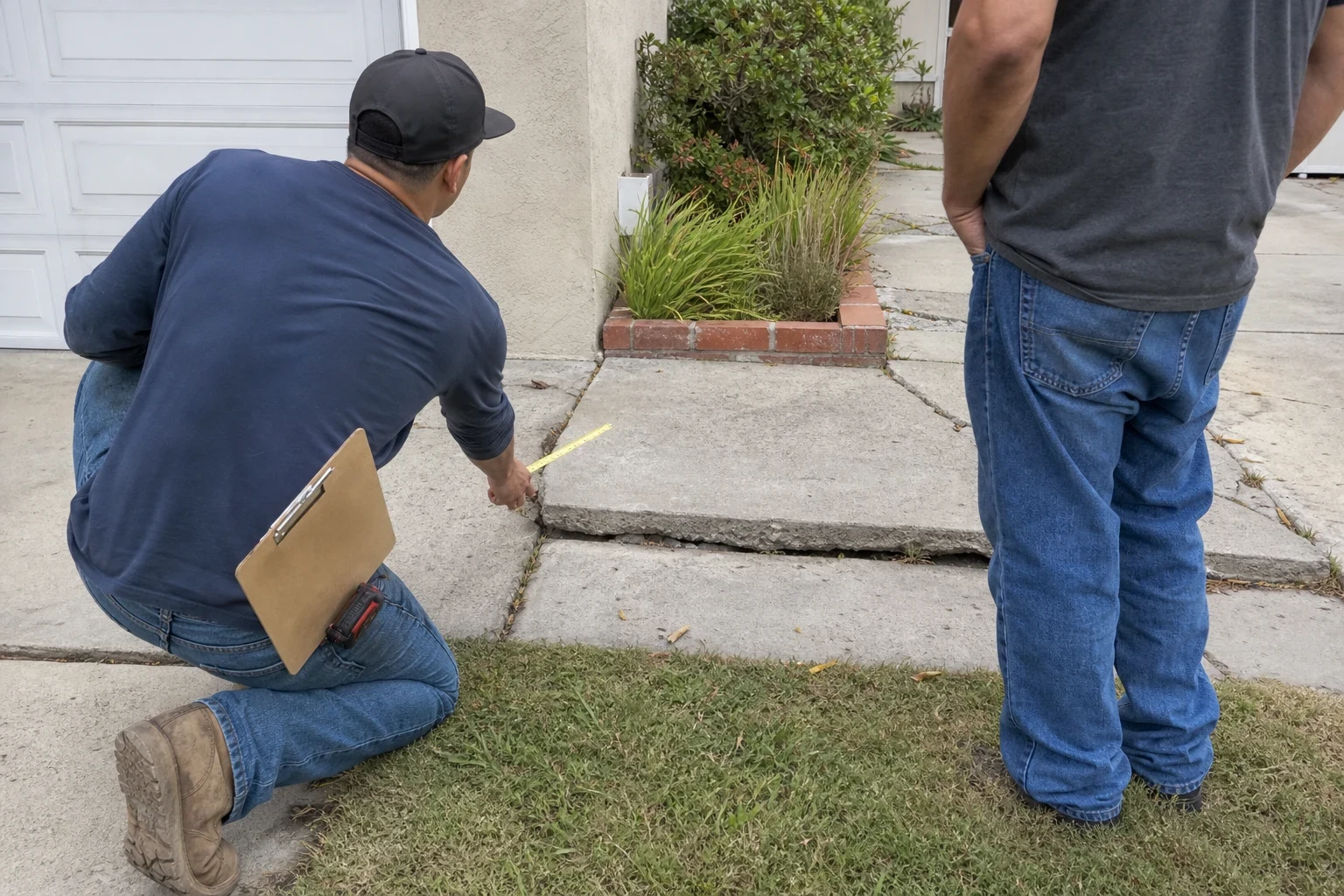
When an old pad has lifted, dropped or cracked into sections, we remove it, haul away the debris and pour fresh concrete on a new base.
Rain collects near your home
A slab built with the correct pitch carries water off and away instead of leaving puddles by the walls.
What moves the cost of a new slab
We price each slab from the footprint, the load it will carry and the ground it sits on. The concrete is one piece of the total, and site preparation or a hard-to-reach spot can matter just as much. Our written estimate lists each part on its own line so nothing is hidden in a single figure.
Footprint and depth
A pad for a condenser can be fairly thin. A base for a filled spa or a workshop full of tools needs more depth, and a larger, deeper slab takes more concrete and more crushed base.
How we reach the forms
When a truck can back up and chute concrete straight in, the pour goes quickly. A spot behind a gate or down a narrow side yard may call for a pump line or wheelbarrows, and that adds crew time.
Clearing the area first
Old concrete, pavers, stumps or thick roots have to be broken out and hauled off before we dig. That work appears as its own item.
Ground conditions
Soft fill or a sloped yard means deeper excavation, extra base and sometimes a thickened edge so the slab holds its shape.
Steel and surface
Rebar runs higher than wire mesh. A smooth steel-trowel finish or a decorative surface takes longer than a plain broom texture.
How a slab job runs
- 1
Visit and measure
We look at the spot, check soil, drainage and access, and ask what the slab will carry. You get a written, line-item estimate and an honest note on whether the city needs a permit, which we pull when it does.
- 2
Dig, base and form
Usually one day. We excavate, compact the base, build forms and set the reinforcement, then check level one more time before concrete is ordered.
- 3
Pour day
In the warm months we start early in the morning so the concrete can be finished before the afternoon heat. We place, screed, finish and cut joints the same day.
- 4
Cure and handover
We keep the surface moist or sealed with a curing compound while it gains strength. Foot traffic is fine in a day or two; we tell you exactly when it can take a shed, spa or equipment.
Questions about concrete slabs
How thick will my slab be?
That comes down to what sits on it. A pad for an AC condenser or a small garden shed can be on the thinner side. A hot tub, a workshop or heavy equipment needs a deeper pour with rebar, and we write the thickness we chose onto your estimate.
Will the city require a permit?
A simple flat slab often goes without one. Once a structure, electrical run or plumbing is tied to it, a permit may be needed, and the rules in Fullerton can differ from those in Placentia or Brea. We look up the requirements for your address and handle the permit when one applies.
How long before the shed or spa can go on?
Concrete continues to harden for several weeks after the pour. Walking on it is fine after a few days, but a full spa or a heavy building should wait a while longer. Before we leave, we give you a firm date for your slab.
Is there a better season to pour?
We work through the whole year and plan each pour around the forecast. In summer we start at first light to stay ahead of the heat, and during the rainy stretch we move the date rather than pour ahead of a storm. If your slab needs to be ready for a spring or summer project, getting on the schedule early makes that easy.
Who stands behind the slab after you leave?
We do. The California State License Board (CSLB) licenses our work, and we have spent 15+ years in business setting forms and finishing concrete. A finished slab comes with a 1-year warranty, and the terms are spelled out for you before any digging starts.
Plan your slab before the season turns
Tell us what the slab needs to hold and where it will go. We will talk through size, thickness and timing so it is cured and ready when you need it.