ServicesDriveways
Concrete Driveways in Fullerton
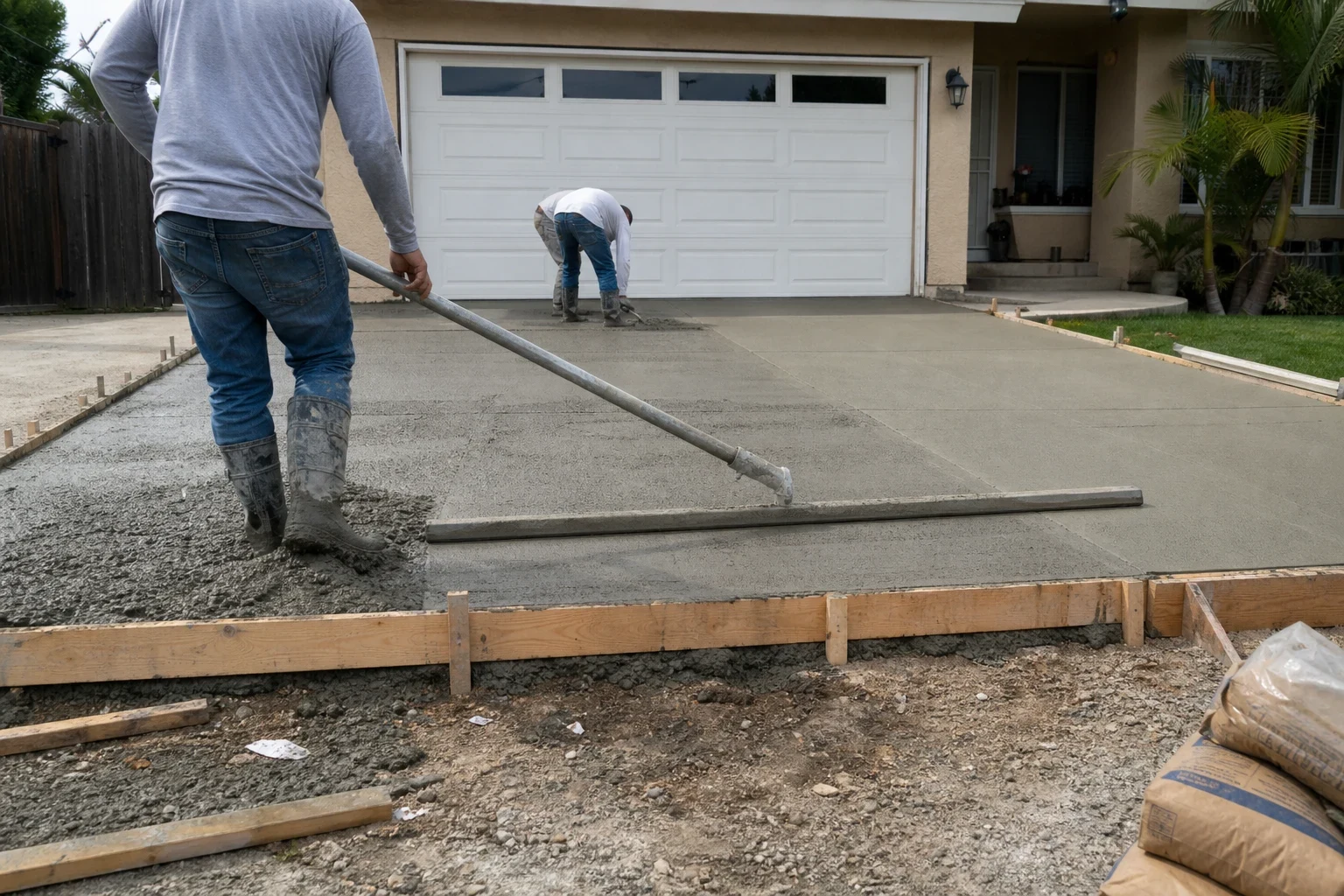
We tear out tired driveways and pour new ones built for daily use. That means a compacted base, steel reinforcement, joints placed where they belong and a finish chosen to suit your home. We plan the pour around heat and rain so the concrete cures the way it should.
A driveway is mostly what you never see
People notice the surface, but a driveway's life is decided underneath it. We dig to the depth the job calls for, lay and compact a gravel base, place steel reinforcement and pour a slab sized for the vehicles you really park there. The finish goes on last, and it only stays handsome when the layers below it are sound.
When we pour matters as much as how. On a hot, dry afternoon, fresh concrete gives up its water too quickly and the surface can craze. A slab hit by a winter storm before it sets can lose its finish. So in summer we start at dawn, and from November through March we plan around the forecast, giving your driveway a calm first few days.
Our company has been in business 15+ years and is licensed by the California State License Board (CSLB). Each day of the job is planned, and you hear from us about what comes next.
Everything that goes into your new driveway
- Tear-out and disposal
- We cut a straight line where the old drive meets anything staying, break up the old concrete or asphalt and truck it away. Nearby paths and planting beds are covered and kept clear.
- Grading and base rock
- The soil is shaped to grade, then crushed aggregate goes down and is compacted in layers. Clay that swells after rain gets extra attention here, because this layer carries everything above it.
- Steel and form work
- Rebar set on chairs, or welded wire mesh, ties the slab together. We set the forms with a slight fall so rain drains toward the street and away from the garage.
- Planned joints
- Joints are tooled in or saw-cut at measured intervals. As the concrete shrinks while it cures, they give it a clean, straight line to crack along instead of a random one.
- The surface you choose
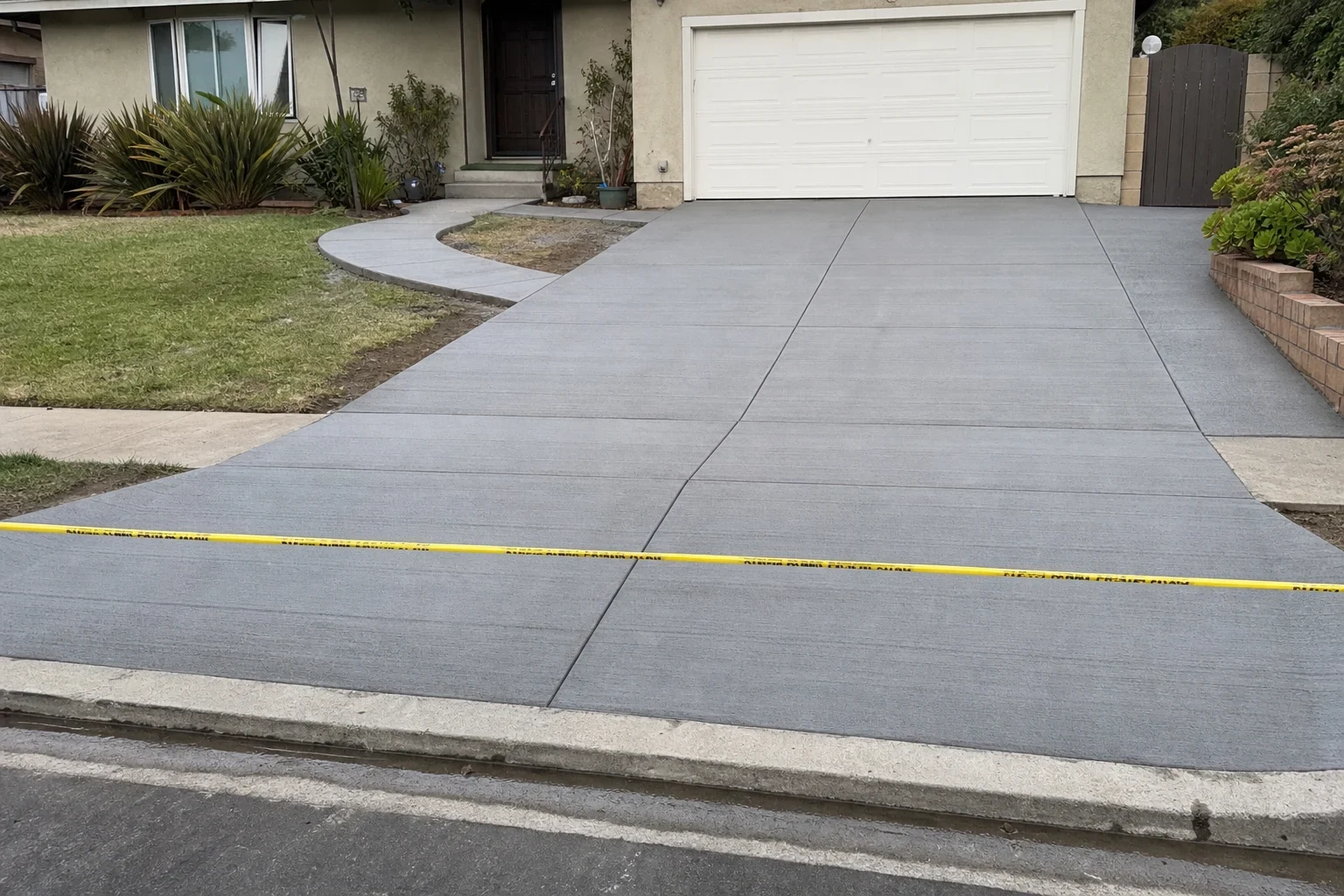
- A broom texture gives tires and shoes good grip on a slope. You can also choose exposed aggregate or a contrasting border, and our Stamped Concrete page covers patterned finishes.
- Curing and a clean site
- A curing compound goes on the fresh surface, we barricade the drive and sweep up before we leave. You get plain guidance on when to walk on it and when to park.
When a driveway is due for replacement
Cracks that grow each year
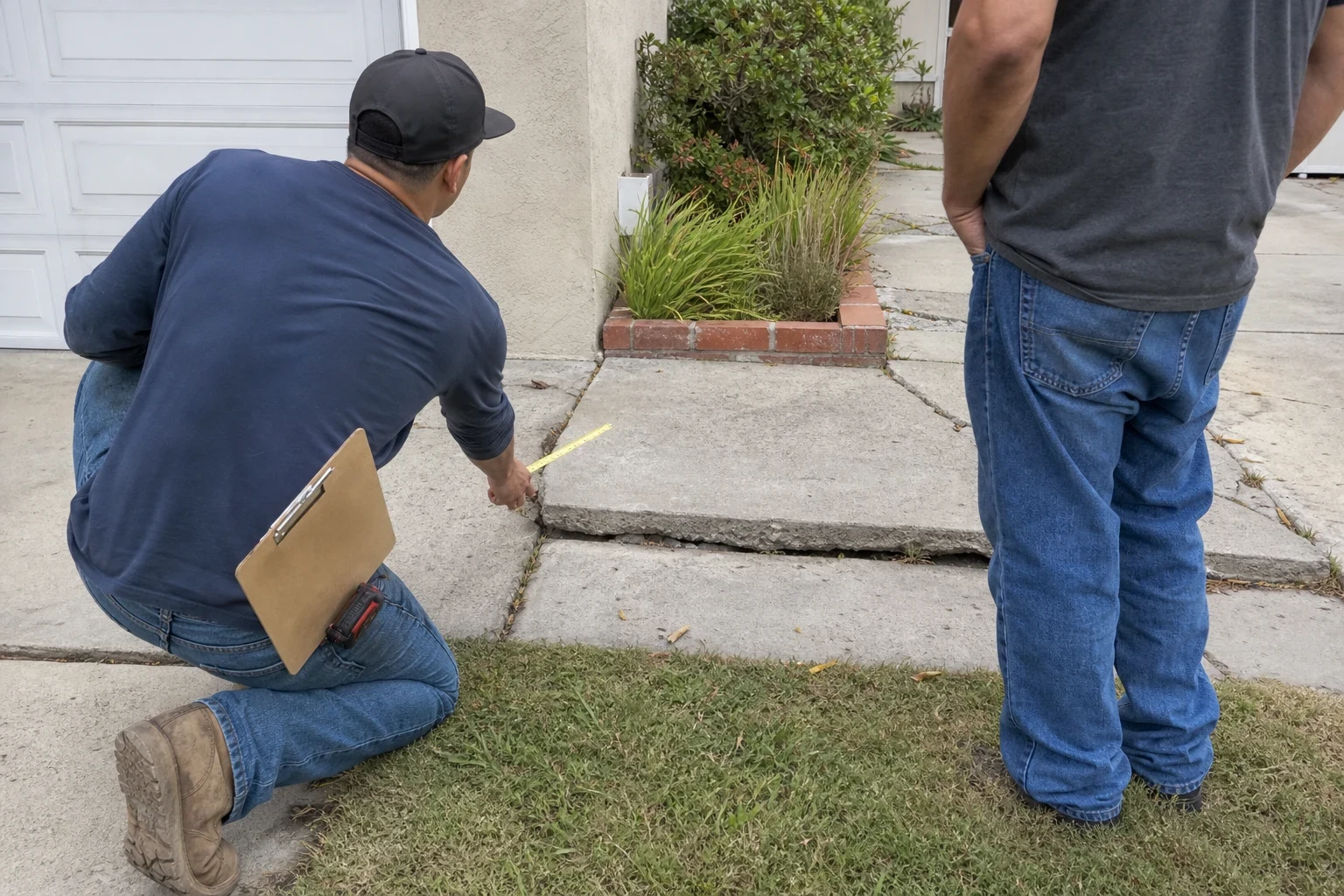
Thin surface lines are expected in any slab. When a crack opens wide enough to catch a heel, or gets longer every season, the base underneath is usually giving way.
Slabs out of level
Roots and moving soil can push one section up or let another drop. The result is a lip that trips people and scrapes low bumpers.
Puddles that linger
If water sits for hours after a storm, the drive has lost its fall. Water collecting by the garage door or foundation is best fixed before the next rainy season.
A crumbling top layer
Flaking patches and bare stone mean the surface has started breaking down, and that damage tends to spread.
Not enough room
Plenty of older homes were built with a narrow single-car drive. If you want space for two cars or a wider entry, replacement is the moment to redraw the layout.
What moves the price of a new driveway
We price each driveway from what we measure and find on your property, not from a chart. The footprint, what has to come out first and the finish you choose usually carry the most weight. Every line on your written estimate stands on its own, which makes it easy to spot the larger items and decide where a simpler choice makes sense.
Footprint and slab depth
More square footage means more concrete and more finishing time. A deeper slab for a pickup, work truck or trailer adds material on top of that.
What comes out first
Old concrete that is thick or full of rebar takes longer to break up and fills more trucks on the way out. Thin asphalt comes up faster and costs less to haul.
Ground conditions
Roots, soft pockets or clay that swells in wet months can mean digging deeper and bringing in extra base rock before any forms go in.
Surface and trim
A broom finish is the simplest choice. Exposed aggregate, colored bands and stamped patterns each take extra labor and material.
Street apron and city steps
Rebuilding the apron where your drive meets the street brings city requirements, which can add a review step and some time to the schedule.
How your driveway project runs
- 1
Site visit and quote
We measure, check the soil and drainage, and talk through finish options. You get a written, line-item estimate so every part of the price is visible.
- 2
Permits and scheduling
If the work touches the curb cut or sidewalk apron, city approval is usually needed, and we handle that paperwork. We then book a pour date with the weather in mind.
- 3
Demolition and base
Removal, grading and compaction typically take a day or two depending on size. Forms and reinforcement go in next, ready for inspection if one is required.
- 4
Pour and finish
The truck arrives early, and the crew places, screeds and finishes the slab while the concrete is workable. Joints are cut and curing compound goes on the same day.
- 5
Cure and handover
Foot traffic is fine after a day or two. Cars can usually park after about seven days, and heavier vehicles should wait longer.
Common questions about new driveways
What time of year is best for a driveway pour?
Mild spring and fall weather gives concrete the easiest start. We still pour through the year. Summer pours begin early in the morning before the heat builds, and in the rainy months we keep an eye on the forecast and shift the date if a storm is on the way.
How soon can I drive on it?
Walking on it is usually fine after a day or two. Give it about a week before you park a car. The slab continues to harden for a month or more, so trucks, trailers and delivery vehicles should stay off a while longer.
Is some cracking normal?
Yes. Concrete shrinks slightly as it dries, and fine cracks can appear. Well-placed control joints guide that shrinkage into neat lines, while a compacted base and steel reinforcement keep sections from drifting apart or sinking.
Does the work come with a warranty?
Yes. Every new driveway we pour is backed by a 1-year warranty. Before any work starts, we explain in plain terms what that coverage includes, so there are no open questions once the slab is down.
How long have you been pouring driveways?
Our company has been in business 15+ years. We take care of any permits the job needs, including city approval when the street apron is part of the work.
Can my driveway match a new walkway or patio?
Yes, and doing them at the same time often saves a second round of setup. We can repeat the finish and border on Walkways and Sidewalks or Patios so the approach to your home looks like one planned design.
Ready for a driveway built to last
Tell us about your current drive and what you would like it to become. We will set up a visit, measure, and give you your quote by phone with a pour date that suits the season.